Catholic Just War Theory and the Case for U.S. Intervention in Iran
Catholic just war theory, developed by St Augustine and St Thomas Aquinas and refined in later magisterial teaching, offers a framework for judging when military force may be morally permissible.
This essay considers whether a carefully limited U.S. or allied military intervention in Iran could be justified as a defensive, proportionate, and rightly ordered response to a regime that poses a grave and ongoing threat to regional and global security. The discussion draws on the thought of Aquinas and later Catholic theologians, on moral lessons drawn from the world’s failure to intervene in the Rwandan genocide and the atrocities of the Khmer Rouge under Pol Pot, and on the philosophy and actions of the Iranian regime since 1979.
Classical Conditions of a Just War
St Thomas Aquinas, drawing on Augustine, articulates three essential conditions for a just war. To be considered just, military action must be declared and undertaken by a legitimate authority, waged for a just cause, and motivated by a right intention.
Aquinas argues that war is lawful only when it is declared by the authority of the sovereign, because otherwise it is an act of private violence rather than public justice. He further insists that the cause must be grounded in a real fault or injustice, not mere ambition or hatred, and that the end must be a rightly ordered peace rather than conquest or revenge.
Later Catholic teaching expands these conditions while remaining faithful to their core. The Catechism of the Catholic Church states that the use of military force requires rigorous conditions of moral legitimacy, including that the damage inflicted by the enemy be lasting, grave, and certain; that all other means of putting an end to it have proved impractical or ineffective; that there be serious prospects of success; and that the use of arms not produce evils and disorders graver than the evil to be eliminated (Catechism of the Catholic Church, 1997, para. 2309).
These conditions together form a moral threshold: armed force is licit only when all are met. The Catechism also notes that evaluating these conditions belongs to the prudential judgement of those responsible for the common good (Catechism of the Catholic Church, 1997, para. 2309).
Rwanda, Pol Pot, and the Duty to Prevent Atrocity
Specific historical examples may help to clarify how these principles apply in practice. The Rwandan genocide and the mass murders committed in Cambodia under Pol Pot demonstrate the moral gravity of just war reasoning in cases where the international community failed to act.
In Rwanda in 1994, Hutu extremists and state-backed militias organised the systematic extermination of Tutsi and moderate Hutu on a vast scale. Estimates commonly place the death toll at around 800,000 people within roughly 100 days (Prunier, 1995). Many just war theorists argue that this situation satisfied the conditions for humanitarian intervention: the evil was grave and certain, peaceful alternatives had failed, and a limited military response could plausibly have saved large numbers of innocents.
Catholic and other moral reflection has widely judged the failure to intervene in Rwanda as a profound moral failure. A lesson for just war reasoning is that states and political communities bear a responsibility to prevent mass atrocities when the conditions of just war are satisfied. Inaction in the face of such evil becomes moral complicity.
Similarly, the Khmer Rouge regime under Pol Pot caused the deaths of an estimated 1.5 to 2 million Cambodians between 1975 and 1979; more than 20% of the population (Kiernan, 2008). Vietnam’s subsequent invasion of Cambodia, which overthrew the regime, has been defended by some just war theorists as a rare instance in which external military force was morally justified to halt ongoing mass atrocity, even though strategic interests were also present.
These cases underscore that even a strict interpretation of last resort and proportionality may be satisfied when a regime is systematically targeting civilians or engaging in large-scale criminal violence. They also show that the Catholic tradition is not reducible to passive pacifism: there are circumstances in which the protection of innocent life and the restoration of a rightly ordered peace require the courageous use of force. Just war theory rightly restricts the use of war. It also points to situations in which there is a moral obligation to use force to prevent greater harm, or to aid he unjustly oppressed. Strict isolationism is not an option for a moral society.
Applying Just War Criteria to Iran
1. Legitimate authority
The President of the United States, as commander in chief within a constitutional republic, possesses the authority to direct limited military action, provided it is consistent with domestic law and constitutional processes. Catholic theology emphasises that legitimate authority must be exercised within an order oriented to justice and the rule of law.
2. Just cause
Iran’s conduct has been widely criticised for support of armed proxy groups, regional destabilisation, repression of internal dissent, and serious human-rights abuses. These include:
• A pattern of sponsoring terrorist and proxy groups such as Hamas, Hezbollah and various militia networks that attack civilians and destabilize the Middle East.
• Repeated attacks on U.S. facilities and personnel, including drone strikes and missile assaults that have killed U.S. and allied military personnel.
• Direct and indirect threats against Israel, including rocket and missile programs explicitly aimed at erasing that state.
• Multiple attacks with credible links to Iran in other countries including Australia.
These matters are relevant to any just war analysis because the Catechism permits defensive force only where the harm inflicted is lasting, grave, and certain (Catechism of the Catholic Church, 1997, para. 2309).
A further element of just cause arises from the Iranian regime’s systematic brutality toward its own population, which has intensified in recent years. The Islamic Republic continues to enforce a deeply discriminatory legal and social order against women, including compulsory hijab laws whose violent enforcement led to the arrest and death in custody of Jina Mahsa Amini and sparked the “Woman, Life, Freedom” protests, in response to which authorities have intensified efforts to repress women and girls. At the same time, lesbian, gay, bisexual and transgender persons face criminalization of same‑sex conduct, the threat of capital punishment including public hanging, and documented cases in which LGBTQ+ activists have been sentenced to death or murdered in a climate of state‑sanctioned hatred.
Most recently, the regime’s response to the 2025–26 nationwide protests has involved massacres of civilians on an unprecedented scale even in the context of ongoing state violence against its own citizens since 1979. Iranian officials themselves acknowledged that thousands have been killed. Time Magazine and Iranian news site Iran International both reported over 30,000 casualties, based on hospital records. Taken together, this pattern of mass killings and entrenched, grave violations of fundamental human rights strengthens the claim that the Iranian state itself is the principal long-standing aggressor against the common good of its own people, and that a carefully constrained external intervention, if it met the other just‑war criteria, could be understood not as an act of imperial aggression but as a last‑resort defence of a population subjected to ongoing atrocity.
3. Right intention
If the stated aims of U.S. action are to degrade Iran’s long‑range missile and nuclear‑weapons capacity, dismantle its most threatening proxy networks, and force a return to a verifiable diplomatic framework, then the intention can be framed as defensive and restorative, rather than imperial or aggressive. Aquinas insists that the end of war must be “a rightly ordered peace,” not merely victory or revenge. A campaign that explicitly aims at a negotiated settlement, respect for international law, and protection of Iranian civilians satisfies this criterion. By contrast, a project of open-ended conquest or unqualified regime change would be much harder to justify under Catholic moral teaching.
4. Last resort
The United States and other states have pursued sanctions, diplomacy, deterrence, and negotiated non-proliferation arrangements for many years, including the Joint Comprehensive Plan of Action. Evidence that Iran has repeatedly violated commitments, advanced uranium enrichment, and expanded its regional aggression support the claim that peaceful alternatives have failed to contain the threat. The insistence that war is only justified when other means have been shown ineffective is thus met, in this case, by the regime’s persistent non-compliance with treaties, continued sponsorship of terrorist groups, violent oppression of its own people, and strategic escalation.
5. Reasonable hope of success and proportionality
Aquinas and later Catholic theologians require a reasonable chance of achieving the intended good; an end to aggression and oppression, and a just and lasting peace. Futile wars are unjust because they multiply suffering with no realistic prospect of achieving their stated objection. A limited campaign focused on targeted strikes against nuclear weapons infrastructure, missile sites, and key command centres, rather than mass bombardment of cities, can plausibly be presented as proportionate to the threat of a nuclear armed theocratic regime whose foreign policy is based in apocalyptic rhetoric.
The Catholic and wider Christian emphasis on minimizing civilian casualties and avoiding indiscriminate attacks means that any just war in Iran would require strict adherence to discrimination and proportionality in accordance with jus in bello (justice in the conduct of war) theory, with careful targeting of legitimate targets, and avoidance of atrocities.
Iran’s Ideology and the Nuclear Question
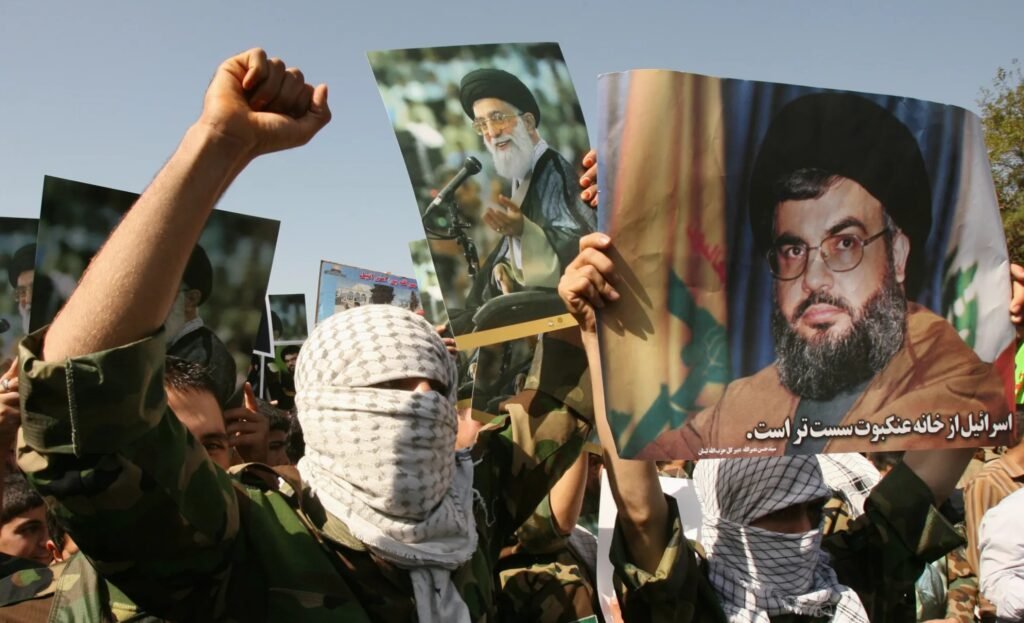
A distinctive feature of the current case is the ideological character of Iran’s leadership. Iranian clerics and officials have repeatedly described the United States as the “Great Satan” and have called for “death to America” in public rallies. Some leaders have espoused eschatological views that welcome apocalyptic conflict, which raises the stakes of any failure to curb the regime’s military‑nuclear ambitions (Amanat, 2002). Catholic moral theology must weigh such ideology heavily because it heightens the probability and imminence of catastrophic harm if the regime acquires nuclear weapons and believes it has a divine warrant to use them. Strongly held faith in a divine call to institute the apocalypse suggests that ordinary deterrence and diplomacy may be less reliable than when negotiating with more secular, rational actor states.
The failure of well-ordered democratic nations to intervene in Rwanda and Cambodia was widely regarded later as a moral failure. In those cases, whether through ignorance, misguided diplomacy, or simply cowardice, the world let the killing play out. In Iran, the Catholic just war framework would weigh the preventive use of force even more seriously, because to the ongoing harm of terrorism and the murder of its own citizens must be added the threat of nuclear proliferation in the hands of an ideologically radical and apocalyptically driven regime, a harm potentially far greater than any damage caused by a limited, carefully targeted military campaign.
Lessons from Rwanda and Cambodia
Failure to intervene in Rwanda and Cambodia reminds us that:
• Grave, ongoing evil demands a robust response when lesser means fail; the cost of inaction can be morally and materially worse than the cost of limited, well‑targeted intervention.
• Interventions must still and always be proportionate and non‑vindictive, with a clear focus on protecting civilians and restoring a just political order.
Applied to Iran, this means that a U.S. intervention may be morally justified if it:
• Responds to a proven pattern of aggression and terrorism, not to mere regime hostility;
• Is likely to be successful.
• Is limited and discriminate, targeting the nuclear and missile infrastructure and key military and paramilitary centres, not the general population;
• Aims at a negotiated settlement that prevents Tehran from acquiring nuclear weapons and rolls back its regional aggression, in line with a just peace framework.
Regime change may also be an acceptable aim if this is the only way the above listed aims can be met, and if there is strong support from a clear majority of Iranian citizens.
Conclusion
Catholic just war theory, as articulated by Aquinas and later magisterial teaching, supports the argument that U.S. military intervention in Iran is justified when it is genuinely defensive, carefully limited, and oriented toward ending terrorism and preventing a catastrophic nuclear threat while safeguarding innocent lives. The moral failures of the world in Rwanda and Cambodia underscore the Church’s teaching that there are times when right order and lasting peace require the courageous use of force against tyrannical regimes, provided all the conditions of just war are met.
References
Amanat, A. (2022). Apocalyptic Islam and Iranian Shi’ism. I.B. Tauris.
Aquinas, T. (1920). Summa Theologica (Fathers of the English Dominican Province, Trans.). Benziger Bros. https://www.newadvent.org/summa/
BBC News. (2024, March 7). Iran responsible for ‘physical violence’ leading to death, UN says. https://www.bbc.com/news/world-middle-east-68511112
BBC News. (2026, January 17). Iran’s supreme leader acknowledges thousands killed during recent protests. https://www.bbc.com/news/articles/ckglee733wno
Catechism of the Catholic Church. (1997). Libreria Editrice Vaticana. https://www.vatican.va/archive/ENG0015/_INDEX.HTM
Kiernan, B. (2008). The Pol Pot regime: Race, power, and genocide in Cambodia under the Khmer Rouge, 1975–79 (3rd ed.). Yale University Press.
Prunier, G. (1995). The Rwanda crisis: History of a genocide. Columbia University Press.



Leave a Reply