Qohel

Make a Difference

Page 20 of 110

Turning off Windows 10 Updates

How to turn off Windows 10 updates

Windows 10 is not as bad as the horrendous Windows 8, but it is looking like being as much of a dud as Vista, if not worse.

Ignore the fact that the built-in apps are hideous. The mail app is the least intuitive I have ever seen, and the hardest to set up the way you want.

The same criticisms apply to Edge, the groundbreaking new web browser. Except it isn’t. It is a clunkier and harder to use version of Internet Explorer that suffers from the same disease as Windows 10 itself, and the mail app, and, and, and … namely, common settings which most users will want to access and change to suit their own needs and style of use, are made almost impossible to find, or are in half a dozen different places.

In Windows 7 you could right click anywhere on the desktop and find most settings in one place – easy! In Windows 10, simple settings like changing your screensaver or customising desktop icons are virtually hidden.

But all those irritations pale into insignificance next to the bizarre decision to force updates whether users want them or not.

You can type update settings into the search box, and eventually, if it is a good mood, it may respond with a list that includes Windows Update Settings. If the wind is blowing in the right direction, when you click on that item, it may eventually open a box, and if you click on the Advanced link in that box, it will tell you absolutely nothing about how to turn updates on or off. You can’t. Microsoft will give them to you whether you want them or not.

It does promise it will not download them over a metered connection, that is, through a mobile network where you pay depending on the amount you download. But it doesn’t work. Most of the older USB mobile dongles do not work with Windows 10. Consequently many people who rely on mobile connections now use mobile WiFi devices. But Windows 10 does not recognise these as a metered connection, just as a wireless network. So if you pay for a 30 day 3GB allowance on your mobile WiFi device, because you only get a few emails and check the news occasionally, your entire download allowance can disappear overnight in forced Windows updates.

You can force it to set specific connections as metered, even though it doesn’t tell you you’ll need to do this. Try to find it… Type metered connection into the search box. Nothing. (It’s Start, Settings, Network and Internet, WiFi, Advanced options.)

Either Microsoft has a policy of deliberately alienating its users, or it is staffed by people who never actually use computers in the real world.

At least you can turn off updates using the Group Policy editor. Most users would not, but it provides a straightforward way for IT technicians to change key system settings.

No, you can’t. Because gpedit.msc is not included in Windows 10 Home. You can find the install files on the internet and install it and run it. But you won’t find it on any official Microsoft site, and downloading it from anywhere else is extremely risky. Not to mention that the install process is not easy, especially if you have a 64 bit system, because you have to manually copy files and folders from one system folder into another.

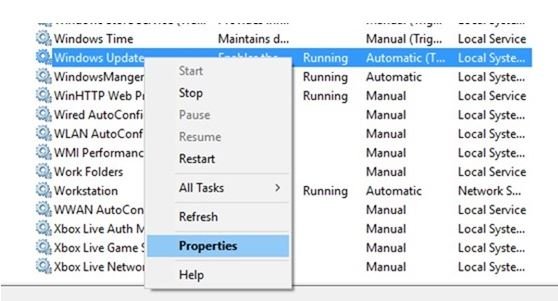
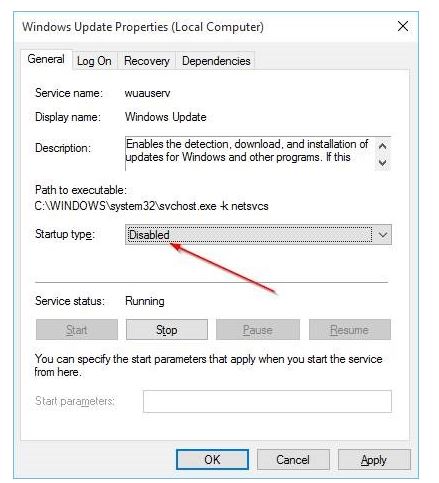
The only workable option is to disable the Windows update service in the Services console. To do this, press the Windows key and r at the same time. Type services.msc and click OK.

In the box that opens, scroll down until you see Windows Update. Right click and a menu will open (see attached screenclip). lick on Properties. Then change Startup type to Disabled. Click OK, and restart your computer.

Keep in mind that not installing updates does leave your computer less secure. But until Microsoft gives users an easy to access and effective way of controlling when updates are downloaded and installed, this may be the only option for users with a limited download allowance.

And in the meantime, can someone please develop an operating system which will run Windows programmes, but is designed for users and not for Microsoft technicians.
update1

update2

Facebook Competitor Launched in Australia

New Social Network Launched on 4th July

Could this Australian start-up be a Facebook Killer?

New online community https://www.blissyoo.com is a very small David to Facebook’s Goliath, but founder Peter Wales is undaunted. “Even Facebook started with just one member,” he said.

Mr Wales said large numbers of people were unhappy with Facebook. “There have been reports of Facebook removing posts and photos, for example of plus size models, or breast feeding mothers, or because they don’t share Facebook’s political views. One woman reported being banned simply for complaining about people being banned. Last month Facebook deleted Swedish journalist Ingrid Carlqvist’s personal account after she reported a 1500% increase in sexual assaults in Sweden over the last ten years, while Twitter deleted the account of gay activist Milo Yiannopoulos following the Orlando nightclub shooting.”

“We have a commitment to freedom of speech. That was our primary reason for developing Blissyoo,” said Mr Wales. “Ordinary people have had enough of someone else deciding what they can say, and what their opinions should be. Blissyoo lets people post their thoughts and stories without interference, and lets them choose what news they want to read.”

Other Facebook competitors have come and gone, but Mr Wales, from Kangaroo Island in South Australia, is confident Blissyoo has enough similar features for Facebook users to feel at home, while offering new features to make the switch worthwhile.

“Facebook has made Mark Zuckerberg and a few others very, very rich,” he said. “But users who do all the work of providing content get absolutely nothing. Blissyoo has a revenue sharing system so users who post regularly get a share of advertising revenue from their timelines.”

The new network launched on July 4th, and Blissyoo mobile and chat apps are available in Android Playstore and the iTunes Store.

“We encourage our users to make suggestions, and to be an active part of the Blissyoo community,” said Mr Wales. “Mark Zuckerberg and Facebook have billions of dollars and thousands of staff. We have a small team dedicated to our members and to freedom of speech. That commitment is the reason Blissyoo was created, and will be a permanent feature.”

Facebook founder Mark Zuckerberg could not be reached for comment.

2106 Australian Election Thoughts

Just back from handing out how to vote cards for a candidate I only halfheartedly support and who will not get my first vote.

Interesting that Sportsbet, who are generallty far more reliable than any media pundits, predict the following:

Coalition: 79
Labor: 66
Greens: 1 (Adam Bandt – Melbourne)
NXT: 1 (Rebekha Sharkie – Mayo)
Other: 3 (Bob Katter – Kennedy, Cathy McGowan – Indi, Andrew Wilkie – Denison)

There will certainly be a huge swing away from Jamie Briggs in Mayo, but unless some very strange things happen with preferences, Jamie will still be returned.

I also doubt Cathy McGowan in Indi. Voters have had a chance now to see how unstable Cathy McGowan is, and I would not be surprised to see Sophie Mirabella returned, especially given Victoria will have what I suspect will be the only statewide swing to the LNP.

Andrew Wilkie in Denison? Only if voters have been smoking too much wacky weed.

The Coalition will be returned with a reduced but working majority.

On the other hand, I would not be surprised if Eden-Monaro, which has been a reliable bell-wether seat for many years, bucks that trend and slips back to Labor.

The Senate is where it will get interesting. Nick Xenophon has achieved precisely nothing, and is a rampant populist. But he has charisma, and sometimes latching onto passing trendy causes does work, temporarily. He may pick up a few more seats in the Senate. That may not be as much of a problem as some LNP leaders think. Despite his desperate need for approval, he is not irrational.

Family First may also pick up an extra seat, as may the LIberal Democrats. The ALA may also collect a couple. While howled down by both major parties, their views and policies do reflect those of a growing number of Australians.

The result will be a (hopefully) chastened Malcolm Turnbull, Jamie Briggs and LNP leadership, but a workable majority in the House, with the balance of power in the Senate held by minority parties, but (again hopefully) minority parties with sensible and experienced candidates, who will support pro-growth and security policies.

Delcons and Deliberations

It is becoming increasingly clear that there is no prospect of a Liberal party led by Malcom Turnbull ever returning to the party’s former core values of social conservatism, fiscal responsibility and personal integrity.

Being determined to win at any cost, and make any promises to do so, is not a win at all. Certainly not for the Australian people. Unless there are principles, there is no point.

Three years of Shorten and Plibersek is a ghastly prospect, with its certainty of increased energy costs and costs of doing business, higher unemployment and debt, and a reopening and refilling of detention centres.

But it is more and more likely that ordinary and loyal Liberal voters will see this as the only alternative to the destruction from within of conservatism in Australian politics.

Those of us who believe that social conservatism and economic libertarianism offer the best path for peace and justice and prosperity for Australia may well believe that this will only be achieved, and with it, a sound future for Australia, by sending a clear message that the Liberal Party needs to return to principled conservative leadership.

The real question is, how to do that without the horrendous cost to Australia of three years (at least) of Shorten and Plibersek?

There has already been a substantial member level backlash against elected members who voted to replace Tony Abbott with Malcolm Turnbull. Turnbull is simply not a conservative. He is a big spending, trendy issue, promise anything to get re-elected salesman. This is not what Liberal Party members, or ordinary Australians, want or need.

No conservative or traditional Liberal voter should feel guilty about giving first preference votes to other, conservative, candidates. In my electorate of Mayo, for example, Bruce Hicks of Family First will get my first preference. I know Bruce. He is a good guy; hard-working, a successful businessman in a very difficult industry (dairy farming) and a school principal. He knows about balancing budgets, and is a person of intelligence and integrity. He won’t be elected though. The seat will be retained by Jamie Briggs.

There is nothing much wrong with Jamie. The press has been monumentally unfair to him on occasion, but he has generally done a good job for his electorate. Apart from supporting an idiotic $20 million white elephant airport development on Kangaroo Island, so that airlines can run routes from capital cities other than Adelaide direct to Kingscote. Except that every major airline has already said they have no interest in such routes and no intention of flying them.

Then there is his refusal to get behind the Kangaroo Island water gap/ferry as part of the national highway network. This is the single change that would do more than anything else to boost the island’s economy, make KI the jewel of South Australian tourism, and help to reverse SA’s declining attractiveness to overseas and inter-state tourists. At the moment it is often cheaper to fly from Adelaide to Bali for the weekend, than to take a family and car from Adelaide to KI for the weekend. Absurd. Jamie’s reason for refusing to support making the ferry part of the highway network (thus equalising transport and freight costs) is that it would give an unfair advantage to Kangaroo Island producers. This is equally absurd. How does partially removing a substantial disadvantage suddenly amount to an unfair advantage?

In addition, Jamie has given his support to what is surely the biggest pork barrel project in Australia’s history; the construction of submarines in Adelaide. Never mind the fact that the contract is to build submarines that haven’t been designed yet, using software that hasn’t been written yet. Never mind that the planned subs will be so much slower than surface navy vessels they will be unable to carry out escort duties, or effective intercept and denial. Never mind that it will take fifty years to build a fleet that will be outdated before the first one hits the water. Never mind that we could lease fast and tested Virginia class submarines from the US and have a functional fleet in five years at half the cost. And please don’t tell me we can’t use them because they can’t be serviced in Australia. A fully equipped service centre could easily be set up in Adelaide, with the subs returning to the US every ten to twenty years for an RCOH (Refueling Complex Overhaul).

Of course every Australian should mind all these things. Our defence focus is rightly on our navy. Defence personnel take enough risks and make enough sacrifices without having to worry about slow, second rate equipment. Tax payers make enough sacrifices that they should not have to worry about paying an extra $20 billion for submarines, even second rate French submarines, just so they can be built in Adelaide. The argument is that this will create jobs in Australia.

The argument is hogwash. The wages and on-costs paid to those employees is money taken from other businesses and wage earners.  The government is simply vastly less efficient than private enterprise at almost everything. That costs money and productivity. Then there is the weight of tax collection and compliance costs, and layers of bureaucracy on top. Every job the government “creates” comes at a cost of 2.2 jobs in private enterprise.

What the “build the subs in Adelaide” boondoggle will do is create about 5,000 jobs in key marginal Liberal seats in Adelaide, at a cost of 12,000 jobs elsewhere. That is behaviour by government, which means the elected members, which should not be rewarded.

In the Senate, the options for conservatives are fairly clear. We need to give Turnbull and his cronies a good thump, while not risking a balance of power held by Xenophon or the Greens. Xenophon is a charismatic character with absolutely nothing to say. He is simply, like Malcolm, a principle-less, headline seeking, big-spending populist. No thanks. The Greens, well, if you could run steel factories on unicorn farts, the world would be a lovely place. Until then, we live in a real world, with real profits and losses and energy needs. So again, no thanks.

My advice would be, vote under the line. The Liberal Democrats, the Australian Liberty Alliance, Family First, are all thoughtful, well-rounded, principled conservative parties. They may get one candidate each in each state. Two would be brilliant. Then give the rest to the LNP. The result, fingers, arms and ankles crossed, should be a Senate where the balance of power is held by real conservatives, while still giving the LNP room to govern effectively.

So, pace Miranda, it is entirely possible to be a deliberate, delectable, delicious conservative, determined to deliver without delay while deleting de louses, and not be at all delusional.

Pope Francis. Enough is Enough.

Many of the media criticisms of Pope Francis have been unfounded, unfair, or simply silly. But this much more thoughtful article by Adam Shaw, an actual practicing Catholic, points out a history of mediocrity and confusing comments that are doing real harm. No question Jorge/Pope Francis is a great pastor and a caring man. But he does not have the intellectual capacity or discipline to be Pope. Of course, the fact is, he is Pope.

Some people would say this means he ought to be, and therefore whatever he says and does is part of the divine plan.

Yes but, yes but, yes but … human stubbornness or deceit or pride can get in the way of God’s perfect plan. That’s what sin does. There was a considerable amount of wrangling in the last conclave. That sends warning signs. What we can do is pray for Pope Francis, that God will lead and encourage him in the right way, and at the same time exercise the critical judgement, thoughtfulness and reason that the Church has always encouraged in its members.

All things work together for good, for those who love the Lord. Romans 8:28

Think Organic is better? Think Again..

In 2012 Stanford University’s Centre for Health Policy did the biggest comparison of organic and conventional foods and found no robust evidence for organics being more nutritious. A brand-new review has just repeated its finding: “Scientific studies do not show that organic products are more nutritious and safer than conventional foods.”

…  animals on organic farms are not generally healthier. A five year US study showed that organic “health outcomes are similar to conventional dairies”. The Norwegian Scientific Committee for Food Safety found “no difference in objective disease occurrence.” Organic pigs and poultry may enjoy better access to open areas, but this increases their load of parasites, pathogens and predators. Meanwhile the organic regulation against feeding bee colonies with pollen supplements in low-pollen periods along with regulation against proper disinfection leads to sharply lower bee welfare.

Organic farming is sold as good for the environment. This is correct for a single farm field: organic farming uses less energy, emits less greenhouse gasses, nitrous oxide and ammonia and causes less nitrogen leeching than a conventional field. But each organic field yields much, much less. So, to grow the same amount of wheat, spinach or strawberries, you need much more land. That means that average organic produce results in the emission of about as many greenhouse gasses as conventional produce; and about 10 per cent more nitrous oxide, ammonia and acidification. Worse, to produce equivalent quantities, organic farms need to occupy 84 per cent more land – land which can’t be used for forests and genuine nature reserves.

Bottom line: Organic farming costs lives and is far worse for the environment.

Orlando Shooter Was Gay

Lots of assumptions were made following the Orldando shooting.

One assumption everyone seems to have made was that the murders were, at least in part, motivated by homophobia. The reason for this was that the shooting took place at a well-known gay nightclub.

But there is no evidence that the shooter was anti-gay. None.

His ex-wife thought he was gay. He frequented the Pulse Club, and used gay dating apps.

He also scouted other possible locations for the shooting, including the local Disney park.

There are no anti-gay remarks on any of his social media posts, or in any of his private messages. His calls during the shooting mention ISIS, and his desire for revenge on America. But he said nothing about gays.

Whatever his possibly confused sexuality, it now seems clear he chose the Pulse Club not because it was a gay club, but because it was a place he knew well, he knew there would be a large number of people in small place where it was difficult to exit quickly, and because it was a gun-free zone, and he knew he would face little effective resistance.

His ex-wife reports the FBI told her not to reveal her husband was gay. Why?

From the linked article …

“At least four Pulse clubgoers remembered seeing Mateen at least a dozen times in the past. But authorities said they had no further information when asked about the sightings on Monday. NBC reported that the FBI was looking into his alleged club visits.

“[He’d get] really, really drunk,” Smith told the Canadian Press. “He couldn’t drink when he was at home — around his wife, or family. His father was really strict . . . He used to bitch about it.”

They also shot down claims that Mateen had snapped after seeing two men kissing each other in public.

“That’s bullcrap, right there. No offense. That’s straight-up crap. He’s been around us,” Smith said. “Some of those people did a little more than (kiss) outside the bar … He was partying with the people who supposedly drove him to do this?”

Kevin West, another regular at Pulse, told the Los Angeles Times that Mateen used gay dating apps on a regular basis and even messaged him on a gay dating app, Jack’d.”

Science is a Creation of the Christian West

People seem not to realise that religious belief was essential to the development of science.

1. The belief that the world is real, objective, and largely independent of our perceptions, and not simply illusion (maya in Sanskrit). That is, that there is something real and enduring there to investigate.

2. The belief that the world is reasonable, and organised in a reasonable, that is, orderly and consistent way, not not simply according to the whim of ancestors or nature spirits or fickle and jealous gods.

3. The belief that the material world is good, and therefore worth investigating, as opposed to the view that the material world inferior, something to be spurned or escaped from.

We take these beliefs so much for granted; that the world is real and objective, that it is ordered according to laws which can be investigated and understood, that nature/the universe is good, and that investigating and learning its laws and systems is a good and worthwhile endeavour, that we forget that only one culture has ever held these views consistently over a long enough period for science to develop.

Science is a creation of the Christian West.

The more science drifts from Christian theology, that is, the more it drifts from understanding reality as independent and objective, and the more it drifts from believing truth is an absolute value in its own right, the more it will be become empty, political, and corrupt.

Conspiracy Theorists

Fukushima, vaccines, chemtrails. It is always the same.

CT (Conspiracy theorist) “Something really bad and scary is happening!”

Me “I don’t think there is any evidence to support that.”

CT “That’s because there is a massive cover-up. The (government, power companies, big pharma, Monsanto) are deliberately hiding the truth from the public.”

Me ” How do you know that?”

CT “Because there is no evidence. If they weren’t covering it up, there would be. Isn’t that obvious? Are you crazy or something?”

More Bogus Quotes ..

Yet another bogus quote in support of a trendy cause.

Spend enough time on Facebook or Twitter and you’ll eventually come across this quote which purportedly emerged from Churchill’s bulldog visage in the darkest days of World War II. It has Churchill responding to a plan to cut money for the arts to fund the war effort by saying: “Then what are we fighting for?”

According to Churchill historian Richard Langworth “This alleged quotation first appeared a few years ago in the Village Voice and is all over the web, but it is not in any of Churchill’s 15 million words in his speeches, papers, letters, articles or books.”

In fact there was no “arts funding” at that time. An allocation of 25,000 pounds had been made to assist cultural societies. This compares with 643,000,000 in defence spending. That money allocated to cultural societies nationwide would have made no difference to defence funding, and it is ludicrous to suggest Churchill would have been faced with a choice between the two.

Rather than dish out invented quotes, it would be better for people who believe taxpayers should be forced to pay for “art” they don’t like, want or need, to list the moral and cultural reasons why money should be extracted from them for that purpose.

Cuts to Arts Funding – Yay!

In response to the customary whining on the ABC about possible reductions in the government spending other people’s money:

Cuts to arts funding are not ‘tantamount to the Coalition Government standing bang in the middle, right on top of Uluru with a megaphone, shouting “Oh just work for free! You know you want to!”‘

It is simply that ordinary tax payers are getting fed up with paying for other people’s hobbies. Artists do not have to work for nothing, nor are they expected to. Like the rest of us, whether butcher, baker, or candle-stick maker, they simply need to produce something other people value enough to pay for.

If they can’t or won’t, that’s fine, but then they have no right to demand the government force working families to pay for what is often mind-bogglingly dull and uncreative “art” that no one would buy if they had a choice.

Government funding for the arts encourages dependence and mediocrity. Time to can it completely.

If you want people to pay for something, make something people are willing to pay for.

« Older posts Newer posts »

© 2026 Qohel