Anthony Fauci has spent this week back in the headlines, not for a new discovery but for a Senate hearing. Subpoenaed by Senator Rand Paul, who released more than a thousand pages of Fauci’s private pandemic diary beforehand, the 85-year-old physician sat before the Homeland Security and Governmental Affairs Committee and, for the first time in roughly 250 congressional appearances over four decades, invoked his Fifth Amendment right and declined to answer questions.
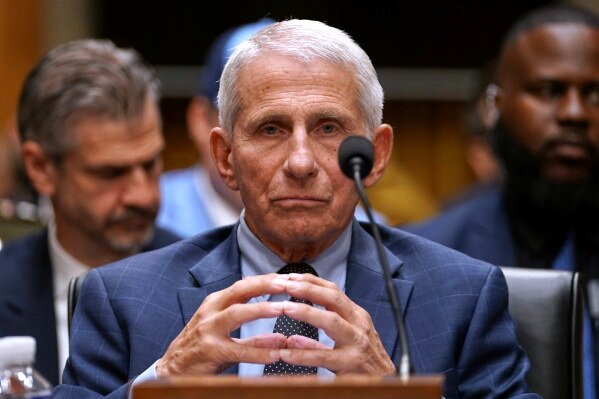
Paul has since promised a contempt vote. On social media, the hearing reignited claims that have circulated for years: that Fauci engineered a pandemic cover-up, lied to the public, and profited from a manufactured health crisis. Almost none of that holds up against the documented record of his career.
Fauci joined the National Institutes of Health in 1968 and led the National Institute of Allergy and Infectious Diseases (NIAID) from 1984 until his retirement in December 2022, serving under seven presidents of both parties. Under his direction, NIAID grew from a comparatively minor NIH branch into a research institute with an annual budget in the billions of dollars.
His scientific accomplishments predate his public fame by decades. In the late 1960s and 1970s, Fauci’s team at the NIH repurposed cancer chemotherapy drugs to treat several previously fatal inflammatory diseases, including polyarteritis nodosa and granulomatosis with polyangiitis, turning near-certain death sentences into survivable, manageable conditions. This is work that is still valuable and still taught in medical training today.
In the early 1980s he became one of the first prominent scientists to take the HIV/AIDS epidemic seriously. His early relationship with AIDS activists was adversarial; groups like ACT UP accused NIAID of moving too slowly on treatment access, and playwright Larry Kramer famously branded him a murderer in a 1988 open letter.
Fauci’s response was unusual for a federal official. He did not respond with anger or pressure, but met with activists, brought them into the regulatory process, and helped accelerate access to experimental HIV drugs. Many of his former critics later became allies and credit him with helping transform HIV from a near-certain death sentence into a manageable chronic illness. He was one of few physicians willing to work directly with AIDS patients in the early days of the outbreak. He also worked directly with Ebola patients when there was considerable fear and uncertainty about that disease.
His work on HIV/AIDS fed directly into his best-known achievement: as one of the architects of the President’s Emergency Plan for AIDS Relief (PEPFAR), launched by President George W. Bush in 2003, Fauci helped design a program that the U.S. government and independent health agencies credit with saving more than 25 million lives worldwide and preventing millions of infants from being born with HIV. PEPFAR has long enjoyed rare bipartisan support; Bush awarded Fauci the Presidential Medal of Freedom, and Barack Obama later called him a “once-in-a-century public health leader.”
Dr Fauci has been careful not allow politics to interfere with his research, and has consistently maintained positive relationships with leaders on all sides of politics. Colleagues have repeatedly said they never knew how he voted, and he was registered as a political independent throughout his career. Dr Fauci was and is widely regarded by both colleagues and politicians as not only a capable medical practitioner, researcher and administrator, but as person of both compassion and integrity.
Much of this week’s coverage frames Fauci’s diary as proof of a private man who understood the costs of pandemic restrictions while a public-facing version of him denied that any such costs existed. The public record does not match that story.
On CNN in April 2020, Fauci said that starting mitigation measures earlier would logically have saved more lives, and acknowledged significant pushback against any shutdown at all. By May 2020 he was warning on CNBC that staying closed too long risked “irreparable damage.” In a 2024 CBS interview, he said plainly that keeping schools closed for a full year had been a mistake, even as he defended the initial closures. He did not, in other words, present pandemic policy as costless, but acknowledged social and financial costs in public, repeatedly, over several years.
Separately, diary entries reportedly show Fauci discussing school and business closures with local officials, in apparent tension with his 2024 congressional testimony that he was not involved in local closure decisions. That tension is real and unresolved, and it deserves scrutiny rather than dismissal. It is a narrower, more specific claim than the sweeping “he lied about everything” narrative that has taken hold online, and it is a long way from evidence of criminal wrongdoing or a manufactured pandemic. Diary entries tend more to show a willingness to advise local officials who sought his help, without in any way directing policy.
“He covered up a lab leak.” This is the most serious accusation, and the one driving Senator Paul’s push for prosecution. Fauci has consistently denied that NIAID funded research that created or enhanced the COVID-19 virus, and has pointed to a February 2020 email in which he urged that any legitimate evidence of a lab origin be reported to intelligence officials as evidence of his transparency, not concealment.
I have commented before on the scientific consensus on this issue. This includes the World Health Organization’s 2025 scientific advisory group review, which holds that the evidence more strongly favours a natural, zoonotic origin, while acknowledging that key data from China remains unavailable and that a lab-related origin cannot be fully excluded. U.S. intelligence agencies are divided on the question. Disagreement among scientists in February 2020, three weeks into a novel outbreak, is what the scientific process looks like. It is not evidence of a cover-up.
“Pleading the Fifth proves he’s guilty.” Legal experts note that invoking the Fifth Amendment is standard advice whenever there is a realistic threat of prosecution, and is not itself evidence of wrongdoing. Fauci received a broad, pre-emptive pardon from President Biden in January 2025, but that pardon does not cover conduct outside its window or new exposure created by testifying.
As I mentioned earlier, Dr Fauci has appeared before Congress some 250 times over four decades and has never previously refused to answer questions. Some of the matters raised may give a clue why he was advised not to do so on this occasion, and suggest that Rand Paul’s Senate committee was not conducting a genuine attempt to gain information about COVID research, practice and policy.
“He lied about masks.” Fauci did tell the public in March 2020 not to buy masks, then reversed that guidance within weeks. He and former colleagues have since acknowledged the communication was poor. The reasoning at the time; thin evidence for community masking, a belief that asymptomatic spread was rare, and perhaps most importantly, a critical shortage of protective equipment for healthcare workers, reflected a genuine, if flawed, scientific understanding of an unfamiliar virus in its first weeks, not a deliberate deception. The guidance changed again as the virus and the evidence changed, including clearer evidence of the effectiveness of masks in community settings, and the onset of the more transmissible Delta variant in 2021. Changing advice on the basis of evidence is how science works.
“He pushed an experimental gene therapy that killed thousands.” The mRNA COVID-19 vaccines are not gene therapy, nor were they experimental: they deliver a temporary set of instructions that the body’s own cells use to build a harmless viral protein and then discard, without altering a person’s DNA. Claims of mass vaccine deaths circulating on social media are not supported by any of the extensive safety monitoring systems conducted by the FDA, CDC, and international regulators. Fauci advocated for the vaccines’ rapid development and distribution as NIAID director, and later as the White House’s chief medical adviser, encouraged work that built directly on decades of NIH-funded mRNA and coronavirus research.
“He did it for fame and money.” Fauci’s diary entries do show a man clearly aware of, and at times visibly pleased by, his own celebrity; perhaps a fair target for criticism of his temperament. But being surprised at and enjoying attention and noting this in what were private diaries, may at worst be a character fault, not a corruption charge. It is a considerable distance from the allegations of financial fraud or an orchestrated “coup” against democratic government made in some of the more extreme social media commentary and in Robert F. Kennedy Jr.’s book about him, and for which there is no evidence whatever. Dr Fauci made no money from coronavirus research or from vaccines. He was a salaried public servant, and was in the same position, director of NIAID, for thirty-eight years.
None of this makes Fauci flawless. He has acknowledged real communication failures, particularly on masks. He was, by the account of former deputies and colleagues, a demanding and sometimes volatile boss. Reasonable people can still debate whether U.S. pandemic policy struck the right balance between limiting the virus’s spread and limiting the damage to children’s education and the economy. That is a debate I will not address here, except to note that the evidence available so far, including the widely misquoted University of Chicago mobility studies, still appears too limited to arrive at a definitive answer.
What the documented record does not support is the version of Fauci circulating on social media: a man who secretly engineered a pandemic, knowingly lied about a cover-up, and grew rich and famous off manufactured suffering. Nor does it support claims he visited the Wuhan lab and funded research there, or that he conducted research involving the torture of puppies, or targeted and undermined physicians who disagreed with him, or that he funded and supported research grafting aborted baby tissues into mice. Those claims are false, and the picture of him they create is a caricature.
Set against that caricature is a career that includes curing diseases once considered fatal, helping build the infrastructure that turned HIV into a survivable illness, co-architecting a program credited with saving more than 25 million lives, working through a pandemic in which he became one of the most threatened public servants in modern American history, continuing to show up when subpoenaed when retired and at 85 years of age.
Dr Fauci’s diary entries do not confirm the accusations made by Senator Paul and those he gathered for what seemed more like a scene from The Crucible than a credible investigation. Fauci has a record of more than forty years of public service which resulted in multiple new treatments and programmes which have cumulatively saved millions of lives. He may not be perfect – no one is. But at 85 years of age he deserves recognition and thanks, not false witness, conceit and calumny.
References:
NPR, “Anthony Fauci invokes Fifth Amendment in Rand Paul Senate hearing” (July 29, 2026): https://www.npr.org/2026/07/29/nx-s1-5910542/fauci-rand-paul-diary-coronavirus-origin-lab-leak-hearing
NPR, “Rand Paul releases Anthony Fauci’s COVID diary entries ahead of hearing” (July 27, 2026): https://www.npr.org/2026/07/27/nx-s1-5909531/rand-paul-anthony-fauci-coronavirus-diary-lab-leak-origin
The Washington Post, “Rand Paul threatens to hold Fauci in contempt after he declines to answer questions” (July 29, 2026): https://www.washingtonpost.com/politics/2026/07/29/fauci-set-face-rand-paul-senate-gop-after-release-his-covid-diary/
CNN, “Diary entries, a subpoena and an anticipated clash: Dr. Anthony Fauci and Rand Paul’s long-running battle returns to the Hill” (July 28, 2026): https://www.cnn.com/2026/07/28/politics/anthony-fauci-diary-rand-paul
U.S. News & World Report, “Rand Paul Promises ‘Repercussions’ After Anthony Fauci Invokes the Fifth Amendment” (July 29, 2026): https://www.usnews.com/news/national-news/articles/2026-07-29/rand-paul-promises-repercussions-after-anthony-fauci-invokes-the-fifth-amendment-at-covid-19-hearing
NPR, “PEPFAR keeps millions of people with HIV alive and may be spared from Trump spending cuts” (July 16, 2025): https://www.statnews.com/2025/07/16/pepfar-hiv-aids-spared-trump-spending-cut/
Wikipedia, “President’s Emergency Plan for AIDS Relief” (PEPFAR overview, funding history, and impact figures): https://en.wikipedia.org/wiki/President%27s_Emergency_Plan_for_AIDS_Relief
Institute for Health Metrics and Evaluation, “Why PEPFAR matters, with Dr. Anthony Fauci”: https://www.healthdata.org/news-events/podcasts/why-pepfar-matters-dr-anthony-fauci


Leave a Reply