Hantaviruses were first isolated in the late 1970s, with Hantaan virus named after the Hantan River, the site of Korean War haemorrhagic fever investigations. Old World hantaviruses (e.g., Hantaan, Puumala, Seoul, Dobrava‑Belgrade) cause haemorrhagic fever with renal syndrome (HFRS), while New World hantaviruses (e.g., Sin Nombre, Andes) cause Hantavirus Pulmonary Syndrome (HPS).
The variant that caused illness and death on the cruise ship MV Hondius is the Andes virus. ANDV is the main cause of HPS in Argentina and is considered endemic but rare, with about 100 confirmed HPS cases per year nationally over many years, concentrated in specific regions such as Andean Patagonia and the northwest.
Most hantaviruses only move from rodents to humans via inhalation of aerosolised rodent excreta, but Andes virus is exceptional in that it can be transmitted between people through close, often household‑level or intimate contact, for example through exhaled droplets (aerosols) especially in the early fever phase, and especially in confined spaces.
One well-known outbreak occurred in Epuyén in Argentina in 2018. A man who had been infected via exposure to rodent excreta attended a birthday party while symptomatic and infected several people. Infection chains extended through family, funerals, and hospital contacts, ultimately giving 34 cases and 11 deaths before strict isolation and contact tracing stopped the outbreak.
Large numbers of cases of HFRS prompted the development of vaccines, which were rolled out as follows:
– 1990s: Inactivated Hantaan/Seoul vaccines are rolled out in China and South Korea, resulting in a large drop in HFRS cases.
– 2000s–2010s: Multiple recombinant, subunit, and DNA vaccine candidates for HFRS and HPS are evaluated, but none are licensed globally.
– Late 2010s–2020s: First Andes virus DNA vaccine reaches human phase 1 and shows good safety and immunogenicity; mRNA and other platforms show strong animal protection but have not yet been fully tested and licensed for human use.
It is likely that the first case in the recent outbreak, a Dutch man who had visited several sites with potentially high native rodent populations, was infected through the inhalation of dust from rat faeces. The infection was then probably – probably only – this has not been confirmed – spread via aerosol droplets to other passengers with whom he was in close contact.
Should we be worried? Not especially. The fatality rate is between thirty and forty percent. Eleven people out of thirty-four known infections in the Epuyen outbreak died. There is no known cure, and at the moment, no approved vaccine. Hantaviruses are found everywhere in the world except Australia and New Zealand. The highest burden of disease occurs in South America and South-East Asia. The Pumala variant is found in Northern and Eastern Europe and causes a less lethal version of HFRS. The Dobrava–Belgrade variant occurs n the Balkans and Western Russia, and causes a much more serious and more often fatal version of HFRS.
But, and it is very big but, the only known variant which spreads between humans is Andes. If you visit areas of South America with high rodent populations, wear a mask and wash your hands carefully after any potential exposure. If you know someone who has recently returned from visiting such areas, and you are going to be in close proximity to that person, observe the same precautions when nearby for a period of a month.
While the consequences of infection are potentially catastrophic, the chances of infection in normal life anywhere outside endemic areas is virtually zero. So be aware but not worried.
What are we to make of some of the anti-vax and conspiracy claims that are being passed around social media? Nothing at all, except that they confirm the gross ignorance of anti-vaxxers, combined with a complete unwillingness to learn or to check what they repost. They had not heard of Hantaviruses before, and assume because they had not heard of it did not exist. Previous mentions therefore prove that this was a planned outbreak.
This is very much the same as their reaction to COVID-19. They had never heard of coronaviruses before. So we got memes featuring disinfectant labels from 2016 claiming to kill 99.9% of coronaviruses, with GOTCHA questions like “How did they know!!?” But there are many coronaviruses. They vary from very mild viruses which cause the common cold, to deadly variants like MERS and SARS. Anti-vaxxers didn’t know this, so they assumed that previous work on vaccines or cures was proof of a conspiracy.
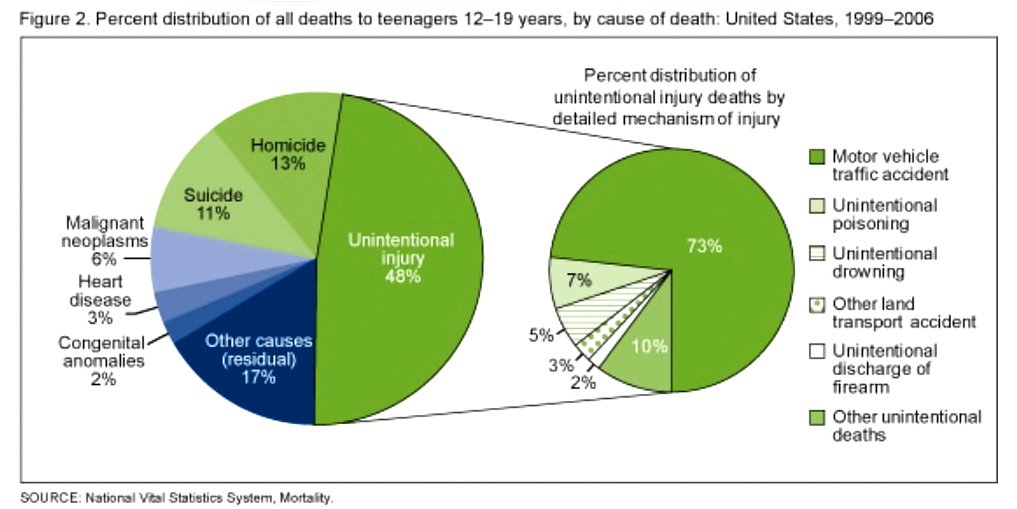
Similar ignorance-based fantasies relate to the claim that young people never died of sudden cardiac failure before COVID vaccines. But in the late 1990s and early 2000s, heart disease including sudden cardiac failure ranked fifth among leading causes of death for teenagers aged 12-19. The rate of sudden cardiac death amongst young people has slightly declined since then, including through the COVID period, because of better pre-sport testing, and the presence of AEDs at most gyms and sporting grounds.
In short, don’t be stressed about Hantaviruses, continue to ignore the arrogant and ignorant anti-vaxxers, and if you have questions or concerns about any disease or health related issues, talk to your GP or even better, a specialist in whatever field you are concerned about, eg a virologist or epidemiologist for viruses.
About twenty years ago a friend who had collapsed into new age silliness gave me a bundle of New Dawn magazines. She thought I would find them interesting. I did, but not for reasons she hoped.
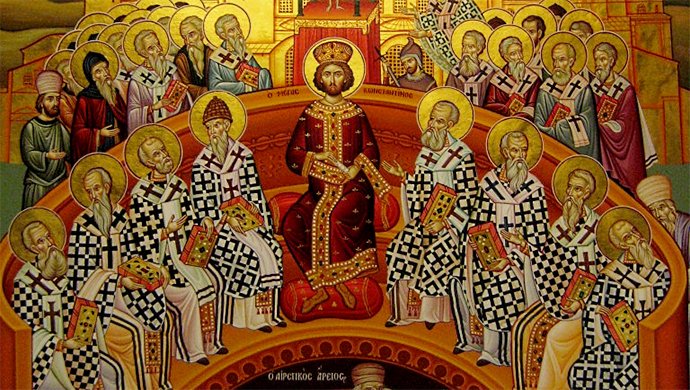
Scattered through them was a series of articles she specifically asked me to read. These argued that Christianity had not existed before the Council of Nicaea.
What they claimed was that Constantine, aware that the Roman Empire was fracturing, had decided that a single, all-incorporating religion was key to re-unifying the empire. So he gathered religious leaders from around the empire, and charged them with creating a new faith that combined aspects of cults and religions from around the known world, and creating a prophet and scriptures to support this new faith. The name Jesus was fabricated from the names of the druid deity Hesus and the Indian god Krishna – Hesus Krishna became Jesus Christ. Constantine then mandated his new religion, and eventually the faked documents of the “New Testament” were assumed to be hundreds of years older than they were, and the faith of Hesus Krishna was claimed to have had its beginnings in an obscure Jewish prophet.
I had a brief email correspondence with the author. I pointed out that we have copies of large sections of the New testament, in documents like the Rylands Library Papyrus P52, and the Chester Beatty Papyri and Bodmer Papyri, some of which have been dated to 100AD to 150AD – 200 years before the Council of Nicaea. False, the author responded. Carbon dating doesn’t work. They are all forgeries. What about non-Christian authors like Josephus, Tacitus, Pliny the Younger, all of whom mention Jesus, with 100 years of the time he lived. Also fakes, responded the author. We live, he claimed, in a completely faked timeline.
But, I responded, we also know what happened at Nicaea, because we have multiple accounts from people who were there. Eusebius, Bishop of Caesarea, for example, who wrote a detailed description of the proceedings in his work Life of Constantine (Book III) and also wrote a personal letter to his church in Caesarea, explaining the reasons he had signed the Creed (mainly because the Creed expresses clearly what the Church had been taught from the beginning). Then there is Athanasius’ book Defence of the Nicene Definition. Athanasius was present at the Council. Eustathius of Antioch was there and wrote his own account of proceedings.
In addition there are letters written by Constantine before and after the Council. We know why the Council was called – to deal with claims by the priest Arius that Jesus was not fully divine, and we have widespread evidence of the conflict caused by those claims. And of course we have the actual documents agreed to at Nicaea. You can find translations of those here: https://oer.minotstateu.edu/projects/105SourceReader/documents-from-the-council-of-nicaea.html None of those documents show any attempt to create new scriptures, nor to invent a new religion.
All fakes, he replied. Constantine had a vested interested in creating a new religion, and was happy to pay to create fake documents to give it authenticity. Gosh. OK. But then what about the Early Church Fathers? I asked. “The what?”, he replied. The hundreds of Christian hymns, sermons, letters and books by bishops and teachers around the empire that come from before the Council. All fakes. They were just made up to give Constantine’s new religion background.
What evidence exists for what you are claiming? I asked. Are there letters or decrees from Constantine you can point to, or documents from members of the Council that support your claims? They have all been destroyed, he answered, to uphold the narrative.
So if all the documents have been destroyed, how did you come to your conclusions about this?
Some of the original documents are in the Secret Vatican Archives. Someone who works there was going to reveal all of this but died in a “car accident.”
The Secret Vatican Archives are not exactly secret, I replied. Almost any research scholar from any religious background or none can visit them. Thousands do every year. And what was the name of the employee who mysteriously died?
He gave up at this point. I have given you the evidence, he said, you decide if you want to believe it, or not. But of course he hadn’t given me any evidence.
The Council of Nicaea and Church history in general are all very interesting, but what has this got to do with Bill Gates?
The answer is that the foregoing is very much like arguing with anti-vaxxers.
Naomi Wolf, for example, is to science reporting what Michael Baigent (The Holy Blood and the Holy Grail) is to theology. Both she and Michael Baigent and his co-writers start with a “conspiracy theory” mindset, assuming something dramatic and nefarious is being hidden, and rely on innuendo and selective reading of records to arrive at conclusions they settled on in advance. In Wolf’s case her bizarre story-telling is compounded by the fact that seems to have not the most basic idea of what she is talking about. Very much like my “Constantine invented Jesus” friend.
For example, Wolf’s recent conclusion that NIH-funded research created SARS-CoV-2 and officials covered it up rests on a speculative leap from “NIH funded coronavirus research” to “NIH secretly created the pandemic virus” without any evidence that any NIH-funded experiment actually produced SARS-CoV-2. She assumes that NIH grants to EcoHealth Alliance, some of which were used to conduct research on coronaviruses, prove that that Anthony Fauci and the NIH were engaged in creating a bio-weapon. But she provides no DNA sequence data, lab records, or primary scientific evidence, or any evidence at all linking any NIH funded research to the pandemic virus.
She doesn’t appear to understand how NIH grant oversight actually works. She treats ordinary grant documentation as evidence of secrecy or malfeasance, when in reality NIH grants undergo peer review, ethics oversight, and public reporting requirements. Anthony Fauci has no personal involvement in the grant process, nor any role in approving which applications are approved. She ignores or is not aware that thousands of NIH grants support basic virology research worldwide, including coronaviruses.
She seems confused about what “gain-of-function” is, and uses it as a blanket term for any coronavirus research. The regulatory definition doesn’t mean this at all. It means specific research into how viruses adapt and change to enhance their transmissibility or virulence. By collapsing this distinction, she treats ordinary grant-terms and policy-compliant research as if it were prohibited or dangerous or inherently nefarious.
Gain of function research is important because it gives us key insights into how viruses may adapt to spread to humans, or may become more dangerous. This process goes on all the time in nature. There are jumps from animal or bird only viruses to human. Ebola, MERS and Zika and are just few recent examples. Gain of function research is not about creating biological weapons, but about helping us prepare for those changes when they occur.
Wolf does not seem to understand statistics or science administration, or even to have a basic grasp of science. Her money-making success and the reposting of her claims relies on the fact that her readers and listeners are similarly impaired, just as John M Allegro relied on the ignorance of Biblical languages of the feverish mob who bought his book The Sacred Mushroom and the Cross, or Hugh Schonfield relied on the lack of knowledge of his readers of ancient and Biblical history for his best-selling book The Passover Plot.
She has professional sounding supporters, of course. William Makis, oncologist and cancer researcher. Except he was found guilty of unprofessional conduct in 2018, is not licensed or registered to practice medicine anywhere, and was a radiologist, not an oncologist. He has never conducted any cancer research. Robert Malone, the creator of mRNA technology. Except he was not the creator of anything. He was a secondary author on three papers published in 1989, 1990 and 1993, and has written nothing since. His claims are regarded as laughable by people who really did work on the development of the use of mRNA in medicine.
People who believe in Bible and history conspiracy theories believe they have experts on their side. John M Allegro, for example, was a respected University of Manchester academic, highly regarded for his work on the Dead Sea Scrolls. Hugh Schonfield was also a respected Biblical scholar with a doctorate from Hebrew Union College. But in any university or seminary around the world anyone who said they were a fan of either would find people looking at them in alarmed confusion before smiling and backing away slowly.
Ditto for people with any knowledge of science when someone says they are a fan of people like Naomi Wolf or Judi Mikovits. I have written about the egregious Miss Wolf (I cannot call her Dr) before, and will not repeat the comments made there: https://qohel.com/2024/10/23/naomi-wolf-and-the-pfizer-papers/
Judi Mikovits is a former, now unemployable, lab assistant, whose claim to fame was that she “discovered” that DNA from xenotropic murine leukemia virus–related virus (XMRV), a mouse‑related retrovirus, could be detected in many patients with myalgic encephalomyelitis/chronic fatigue syndrome (ME/CFS) but not in healthy controls. The original paper was published in Science in 2009. Science not only retracted that paper but also investigated concerns about image manipulation and data integrity in that and related work.
A detailed review in a medical journal describes her as a “serial scientific fantasist” whose published XMRV evidence was “unequivocally shown” to arise from contamination and explicit fabrication, and notes that she was never a leading figure in retrovirology prior to the XMRV episode. More information on the mendacious Miss Mikovits here: https://pmc.ncbi.nlm.nih.gov/articles/PMC7398426/
But what about Peter McCulloch? You can’t deny that he was a respected cardiologist. No, that’s right. He WAS a respected cardiologist. Just Like John M Allegro and Hugh Schonfield WERE respected academics. Now he makes a fortune selling fake cures to cancer victims. His company, the Wellness Company, sells multivitamins, “spike detox” supplements, and pricier “adverse‑reaction” packages (typically hundreds of dollars) aimed at people who believe they were harmed by vaccines, including people suffering from cancer. Commentators in public‑health and science‑communication circles have described this as a scam. McCulloch promotes dramatic, disproven claims about vaccine “spike” danger, then directs people toward expensive supplements that he and his company profit from, all without evidence that these products treat or prevent anything real.
A couple of articles here on the no-longer-licensed-to practice-medicine-anywhere Dr McCulloch:
Alternatively, if you are interested in reality, you could actually read some actual scientific research by actual scientists, a very small part of which is summarised here, with links to original papers:
Of course anti-vaxxers will continue to shriek “It’s all paid for by big pharma!!!” But that is just something anti-vaxxers say. They can’t produce any evidence of this because there isn’t any evidence, any more than religious nuts can produce evidence that Constantine invented Christianity. In reality research funding comes from multiple government, private and commercial sources.
When your faith in what you see on social media demands that you believe that almost all doctors, nurses, universities and government health departments around the world are corrupt and care more about money than their patients, and that fake scholars like Wolf and Mikovits or the one in 100,000 medical personnel who are grifters like Makis and McCulloch who make a fortune out fake cures are really the ones who are really bravely telling the truth, then you either need to do some serious reading and thinking, or you need to consider whether such a baseless and paranoid way of looking at the world and the people in it is so divorced from reality that it amounts to mental illness.
Catholic Just War Theory and the Case for U.S. Intervention in Iran
Catholic just war theory, developed by St Augustine and St Thomas Aquinas and refined in later magisterial teaching, offers a framework for judging when military force may be morally permissible.
This essay considers whether a carefully limited U.S. or allied military intervention in Iran could be justified as a defensive, proportionate, and rightly ordered response to a regime that poses a grave and ongoing threat to regional and global security. The discussion draws on the thought of Aquinas and later Catholic theologians, on moral lessons drawn from the world’s failure to intervene in the Rwandan genocide and the atrocities of the Khmer Rouge under Pol Pot, and on the philosophy and actions of the Iranian regime since 1979.
Classical Conditions of a Just War St Thomas Aquinas, drawing on Augustine, articulates three essential conditions for a just war. To be considered just, military action must be declared and undertaken by a legitimate authority, waged for a just cause, and motivated by a right intention.
Aquinas argues that war is lawful only when it is declared by the authority of the sovereign, because otherwise it is an act of private violence rather than public justice. He further insists that the cause must be grounded in a real fault or injustice, not mere ambition or hatred, and that the end must be a rightly ordered peace rather than conquest or revenge.
Later Catholic teaching expands these conditions while remaining faithful to their core. The Catechism of the Catholic Church states that the use of military force requires rigorous conditions of moral legitimacy, including that the damage inflicted by the enemy be lasting, grave, and certain; that all other means of putting an end to it have proved impractical or ineffective; that there be serious prospects of success; and that the use of arms not produce evils and disorders graver than the evil to be eliminated (Catechism of the Catholic Church, 1997, para. 2309).
These conditions together form a moral threshold: armed force is licit only when all are met. The Catechism also notes that evaluating these conditions belongs to the prudential judgement of those responsible for the common good (Catechism of the Catholic Church, 1997, para. 2309).
Rwanda, Pol Pot, and the Duty to Prevent Atrocity Specific historical examples may help to clarify how these principles apply in practice. The Rwandan genocide and the mass murders committed in Cambodia under Pol Pot demonstrate the moral gravity of just war reasoning in cases where the international community failed to act.
In Rwanda in 1994, Hutu extremists and state-backed militias organised the systematic extermination of Tutsi and moderate Hutu on a vast scale. Estimates commonly place the death toll at around 800,000 people within roughly 100 days (Prunier, 1995). Many just war theorists argue that this situation satisfied the conditions for humanitarian intervention: the evil was grave and certain, peaceful alternatives had failed, and a limited military response could plausibly have saved large numbers of innocents.
Catholic and other moral reflection has widely judged the failure to intervene in Rwanda as a profound moral failure. A lesson for just war reasoning is that states and political communities bear a responsibility to prevent mass atrocities when the conditions of just war are satisfied. Inaction in the face of such evil becomes moral complicity.
Similarly, the Khmer Rouge regime under Pol Pot caused the deaths of an estimated 1.5 to 2 million Cambodians between 1975 and 1979; more than 20% of the population (Kiernan, 2008). Vietnam’s subsequent invasion of Cambodia, which overthrew the regime, has been defended by some just war theorists as a rare instance in which external military force was morally justified to halt ongoing mass atrocity, even though strategic interests were also present.
These cases underscore that even a strict interpretation of last resort and proportionality may be satisfied when a regime is systematically targeting civilians or engaging in large-scale criminal violence. They also show that the Catholic tradition is not reducible to passive pacifism: there are circumstances in which the protection of innocent life and the restoration of a rightly ordered peace require the courageous use of force. Just war theory rightly restricts the use of war. It also points to situations in which there is a moral obligation to use force to prevent greater harm, or to aid he unjustly oppressed. Strict isolationism is not an option for a moral society.
Applying Just War Criteria to Iran
1. Legitimate authority The President of the United States, as commander in chief within a constitutional republic, possesses the authority to direct limited military action, provided it is consistent with domestic law and constitutional processes. Catholic theology emphasises that legitimate authority must be exercised within an order oriented to justice and the rule of law.
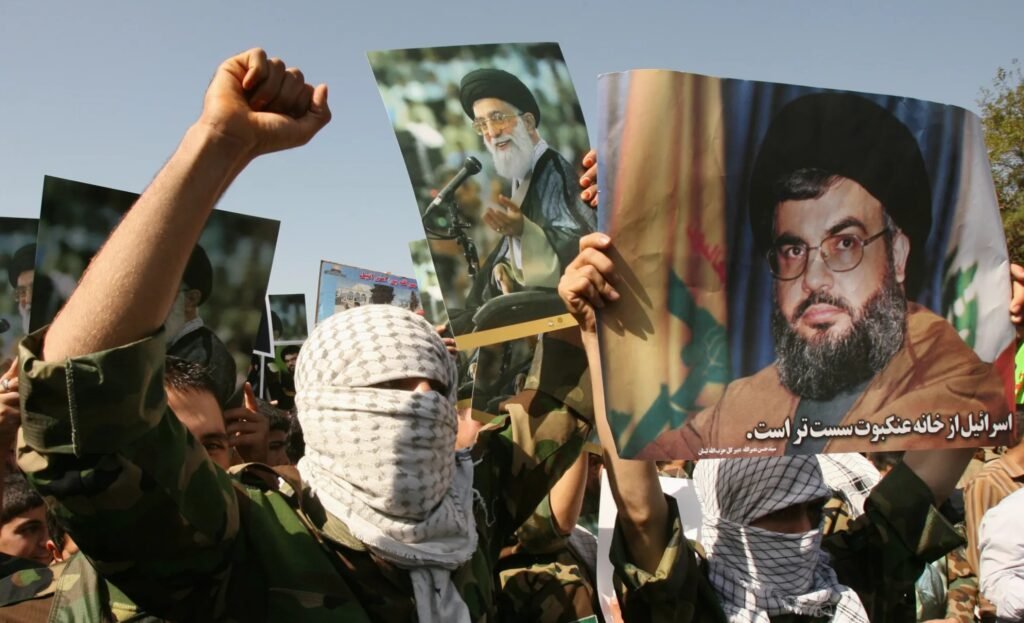
2. Just cause Iran’s conduct has been widely criticised for support of armed proxy groups, regional destabilisation, repression of internal dissent, and serious human-rights abuses. These include: • A pattern of sponsoring terrorist and proxy groups such as Hamas, Hezbollah and various militia networks that attack civilians and destabilize the Middle East. • Repeated attacks on U.S. facilities and personnel, including drone strikes and missile assaults that have killed U.S. and allied military personnel. • Direct and indirect threats against Israel, including rocket and missile programs explicitly aimed at erasing that state. • Multiple attacks with credible links to Iran in other countries including Australia.
These matters are relevant to any just war analysis because the Catechism permits defensive force only where the harm inflicted is lasting, grave, and certain (Catechism of the Catholic Church, 1997, para. 2309).
A further element of just cause arises from the Iranian regime’s systematic brutality toward its own population, which has intensified in recent years. The Islamic Republic continues to enforce a deeply discriminatory legal and social order against women, including compulsory hijab laws whose violent enforcement led to the arrest and death in custody of Jina Mahsa Amini and sparked the “Woman, Life, Freedom” protests, in response to which authorities have intensified efforts to repress women and girls. At the same time, lesbian, gay, bisexual and transgender persons face criminalization of same‑sex conduct, the threat of capital punishment including public hanging, and documented cases in which LGBTQ+ activists have been sentenced to death or murdered in a climate of state‑sanctioned hatred.
Most recently, the regime’s response to the 2025–26 nationwide protests has involved massacres of civilians on an unprecedented scale even in the context of ongoing state violence against its own citizens since 1979. Iranian officials themselves acknowledged that thousands have been killed. Time Magazine and Iranian news site Iran International both reported over 30,000 casualties, based on hospital records. Taken together, this pattern of mass killings and entrenched, grave violations of fundamental human rights strengthens the claim that the Iranian state itself is the principal long-standing aggressor against the common good of its own people, and that a carefully constrained external intervention, if it met the other just‑war criteria, could be understood not as an act of imperial aggression but as a last‑resort defence of a population subjected to ongoing atrocity.
3. Right intention If the stated aims of U.S. action are to degrade Iran’s long‑range missile and nuclear‑weapons capacity, dismantle its most threatening proxy networks, and force a return to a verifiable diplomatic framework, then the intention can be framed as defensive and restorative, rather than imperial or aggressive. Aquinas insists that the end of war must be “a rightly ordered peace,” not merely victory or revenge. A campaign that explicitly aims at a negotiated settlement, respect for international law, and protection of Iranian civilians satisfies this criterion. By contrast, a project of open-ended conquest or unqualified regime change would be much harder to justify under Catholic moral teaching.
4. Last resort The United States and other states have pursued sanctions, diplomacy, deterrence, and negotiated non-proliferation arrangements for many years, including the Joint Comprehensive Plan of Action. Evidence that Iran has repeatedly violated commitments, advanced uranium enrichment, and expanded its regional aggression support the claim that peaceful alternatives have failed to contain the threat. The insistence that war is only justified when other means have been shown ineffective is thus met, in this case, by the regime’s persistent non-compliance with treaties, continued sponsorship of terrorist groups, violent oppression of its own people, and strategic escalation.
5. Reasonable hope of success and proportionality Aquinas and later Catholic theologians require a reasonable chance of achieving the intended good; an end to aggression and oppression, and a just and lasting peace. Futile wars are unjust because they multiply suffering with no realistic prospect of achieving their stated objection. A limited campaign focused on targeted strikes against nuclear weapons infrastructure, missile sites, and key command centres, rather than mass bombardment of cities, can plausibly be presented as proportionate to the threat of a nuclear armed theocratic regime whose foreign policy is based in apocalyptic rhetoric.
The Catholic and wider Christian emphasis on minimizing civilian casualties and avoiding indiscriminate attacks means that any just war in Iran would require strict adherence to discrimination and proportionality in accordance with jus in bello (justice in the conduct of war) theory, with careful targeting of legitimate targets, and avoidance of atrocities.
Iran’s Ideology and the Nuclear Question A distinctive feature of the current case is the ideological character of Iran’s leadership. Iranian clerics and officials have repeatedly described the United States as the “Great Satan” and have called for “death to America” in public rallies. Some leaders have espoused eschatological views that welcome apocalyptic conflict, which raises the stakes of any failure to curb the regime’s military‑nuclear ambitions (Amanat, 2002). Catholic moral theology must weigh such ideology heavily because it heightens the probability and imminence of catastrophic harm if the regime acquires nuclear weapons and believes it has a divine warrant to use them. Strongly held faith in a divine call to institute the apocalypse suggests that ordinary deterrence and diplomacy may be less reliable than when negotiating with more secular, rational actor states.
The failure of well-ordered democratic nations to intervene in Rwanda and Cambodia was widely regarded later as a moral failure. In those cases, whether through ignorance, misguided diplomacy, or simply cowardice, the world let the killing play out. In Iran, the Catholic just war framework would weigh the preventive use of force even more seriously, because to the ongoing harm of terrorism and the murder of its own citizens must be added the threat of nuclear proliferation in the hands of an ideologically radical and apocalyptically driven regime, a harm potentially far greater than any damage caused by a limited, carefully targeted military campaign.
Lessons from Rwanda and Cambodia Failure to intervene in Rwanda and Cambodia reminds us that: • Grave, ongoing evil demands a robust response when lesser means fail; the cost of inaction can be morally and materially worse than the cost of limited, well‑targeted intervention. • Interventions must still and always be proportionate and non‑vindictive, with a clear focus on protecting civilians and restoring a just political order.
Applied to Iran, this means that a U.S. intervention may be morally justified if it: • Responds to a proven pattern of aggression and terrorism, not to mere regime hostility; • Is likely to be successful. • Is limited and discriminate, targeting the nuclear and missile infrastructure and key military and paramilitary centres, not the general population; • Aims at a negotiated settlement that prevents Tehran from acquiring nuclear weapons and rolls back its regional aggression, in line with a just peace framework.
Regime change may also be an acceptable aim if this is the only way the above listed aims can be met, and if there is strong support from a clear majority of Iranian citizens.
Conclusion Catholic just war theory, as articulated by Aquinas and later magisterial teaching, supports the argument that U.S. military intervention in Iran is justified when it is genuinely defensive, carefully limited, and oriented toward ending terrorism and preventing a catastrophic nuclear threat while safeguarding innocent lives. The moral failures of the world in Rwanda and Cambodia underscore the Church’s teaching that there are times when right order and lasting peace require the courageous use of force against tyrannical regimes, provided all the conditions of just war are met.
References Amanat, A. (2022). Apocalyptic Islam and Iranian Shi’ism. I.B. Tauris. Aquinas, T. (1920). Summa Theologica (Fathers of the English Dominican Province, Trans.). Benziger Bros. https://www.newadvent.org/summa/ BBC News. (2024, March 7). Iran responsible for ‘physical violence’ leading to death, UN says. https://www.bbc.com/news/world-middle-east-68511112 BBC News. (2026, January 17). Iran’s supreme leader acknowledges thousands killed during recent protests. https://www.bbc.com/news/articles/ckglee733wno Catechism of the Catholic Church. (1997). Libreria Editrice Vaticana. https://www.vatican.va/archive/ENG0015/_INDEX.HTM Kiernan, B. (2008). The Pol Pot regime: Race, power, and genocide in Cambodia under the Khmer Rouge, 1975–79 (3rd ed.). Yale University Press. Prunier, G. (1995). The Rwanda crisis: History of a genocide. Columbia University Press.
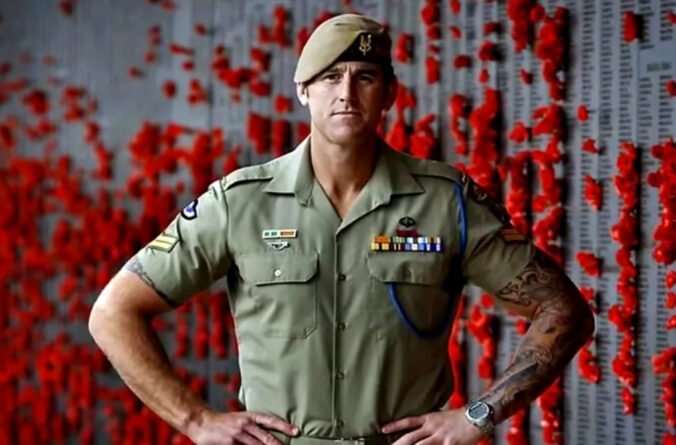
I was troubled to hear a few days ago of the arrest of Ben Roberts-Smith. Cpl Roberts-Smith is a war hero, a man of outstanding courage. That deserves respect. There was also the possibility that the case against him was biased from the beginning. It had not grown out of an army or police investigation, but out of “investigative journalism” a category of writing which is all too often agenda driven.
Having worked with emergency services personnel, and in the prison service, I have little time for armchair second-guessing of decisions that have to be made quickly and in dangerous circumstances.
In addition, the alleged crimes occurred some fifteen years ago. Statutes of limitations do not apply to murder or war crimes, but they are not technicalities. The further removed in time from the events, the more difficult it is to mount a comprehensive defense.
Exculpatory physical and forensic evidence may have been lost. Witnesses may have died or not be able to be found. Memories fade or change. Considerable care must be taken in any prosecution, increasingly so and with increasing doubt with every year that passes.
It is all very well to say “Let the law run its course,” but even the best-run courts can produce uncertain results. I have written published articles in a few such cases before, for example in relation to Archbishop Wilson of Adelaide, and Cardinal Pell. I had met both men and knew something of their careers, and the accusations seemed intrinsically unlikely. But feeling so, and having a fleeting familiarity with the accused is not enough. Coming to a conclusion that has any value means taking care to examine the evidence.
In the Wilson and Pell cases I examined court transcripts where available, along with witness statements, and conversed with people who were present in court. I became convinced that the claims against Archbishop Wilson were extremely unlikely, and the claims against Cardinal Pell verged on impossibility. In both those cases, early guilty verdicts were overturned by higher courts.
Let’s examine the evidence against Cpl Roberts-Smith.
Jurisdiction and legal basis:
• Roberts-Smith is charged with five counts of war crime murder involving the killing of unarmed Afghan detainees, which fall within Division 268 of the Criminal Code Act 1995 (Cth) (war crimes, crimes against humanity, genocide).
• The alleged killings occurred in Afghanistan between 2009 and 2012 while Roberts‑Smith was serving with the SAS in Uruzgan Province.
• Division 268 operates with extended geographical jurisdiction (via section 15.4 of the Criminal Code), allowing Australia to investigate and prosecute conduct by its nationals and service members overseas.
• The AFP and the Office of the Special Investigator have conducted investigations on the basis of this legislation. This is consistent with how Australia has chosen to implement its obligations under international humanitarian law.
There is clear statutory power for federal agencies to investigate and for the Commonwealth to prosecute alleged war‑crime murders committed by ADF personnel while serving overseas.
Gravity and specificity of the alleged offences:
• The indictment focuses on five specific alleged murders of unarmed detainees or civilians: incidents at Kakarak (two counts in April 2009), Darwan (one count in September 2012, involving Ali Jan), and Chinartu/Nachar (two counts in October 2012, including a joint enterprise killing).
• These are not broad or vague allegations. They are tied to particular dates, locations, operations, and victims, with detailed factual narratives able to be proved or disproved at trial.
This level of specificity, especially around dates, places and the status of victims (detainees, unarmed civilians), is necessary in order to justify a criminal trial for serious war‑crime charges.
Evidentiary foundation from prior proceedings:
• A 110‑day Federal Court defamation trial in 2021–2022 produced extensive evidence: 42 witnesses, including about 32 SAS soldiers (under pseudonyms) and three Afghan civilians giving evidence by video from Kabul.
• Evidence in this civil trial was not accepted uncritically. Justice Besanko rejected the evidence of person 100, noting either a lapse in memory or a deliberate cover-up, along with evidence of person 35, finding that that person and Cpl Roberts-Smith had fabricated a story designed to discredit another witness. Justice Besanko also considered the evidence of person 17, a former girlfriend, to be compromised and possibly untruthful. Her complaints and evidence form no part of the present case.
• In 2023, Justice Besanko found, on the civil balance of probabilities (applying the Briginshaw standard), that Roberts‑Smith murdered or was complicit in the murder of four Afghan men and engaged in bullying and other unlawful conduct.
• To clarify, in Briginshaw v Briginshaw (1938), the High Court held that the more serious an allegation, the stronger and more cogent the evidence needs to be before a court will be satisfied that the allegation is proved on the balance of probabilities. In the case of allegations serious criminal misconduct, such the allegations against Cpl Ben Roberts-Smith, the evidence needs to clear and decisive.
• On appeal, the Full Federal Court held in 2025 that this evidence was “sufficiently cogent” to support those findings. While not a criminal conviction, it confirms that a senior court has tested key witnesses and accepted that the core murder allegations have been proven to the standard required in a Civil case.
Witness evidence and corroboration:
• Multiple SAS eyewitnesses gave first‑hand accounts of the Kakarak, Darwan and Chinartu incidents, including the killing of a man with a prosthetic leg at Whiskey 108, the cliff incident with Ali Jan at Darwan, and an execution‑style killing at Chinartu allegedly directed by Roberts‑Smith.
• Afghan witnesses gave evidence about who was detained, who was unarmed, and how bodies were later found, particularly in Darwan. Their accounts were attacked in cross‑examination as being tainted by hostility to Australian troops. However they were consistent with accounts from Australian witnesses and were accepted as corroborative.
• Justice Besanko found that the key SAS and Afghan witnesses were generally credible: their evidence was internally consistent on central facts, corroborated by others and by mission records, and often given against strong unit‑loyalty pressures.
From the perspective of police and the Attorney-General this pattern; multiple independent eyewitnesses, corroboration by documents and physical circumstances, and prior judicial acceptance of their credibility, strongly supports further investigation leading to criminal charges and testing the evidence to the criminal standard.
Adverse credibility findings against Roberts‑Smith
• The Federal Court found that Roberts‑Smith was “not an honest and reliable witness”, identifying motives to lie (reputation, Victoria Cross status, financial interest in the lawsuit).
• The judge found deliberate lies about important collateral matters, including the fabricated story about a soldier being stood down after shooting a dog (collusion with Person 35), and false evidence about burying USB drives containing relevant material in his backyard.
• Besanko concluded that Roberts‑Smith was willing to shape and conceal evidence to protect himself, and that this undermined his denials regarding alleged unlawful killings.
In ordinary prosecutorial practice, such sustained adverse credibility findings in earlier litigation are a powerful factor indicating that a prosecution is not oppressive or speculative, but responds to a real risk that serious crimes were committed and then concealed.
Consistency with Australian and international practice:
• Australia has committed itself, in legislation and policy, to investigating and prosecuting alleged war crimes by its own forces rather than granting automatic impunity or relying solely on international courts. Division 268 of the Criminal Code is a central part of this framework. The credibility of Australia’s defence forces and justice system depends on its doing so wherever serious and substantiated allegations of serious are made, regardless of resistance or adverse public opinion.
• The Brereton Report into alleged SAS war crimes explicitly recommended criminal investigations, and the subsequent establishment of the Office of the Special Investigator and AFP war‑crimes teams is the practical implementation of those recommendations. While there are reasons to scrutinise the Brereton Inquiry’s processes, these mostly relate to interpretive weight and a perceived lack of adversarial protections and do not suggest its findings are incorrect or that it was compromised.
• Proceeding with charges where there is detailed incident‑based evidence, multiply corroborated witnesses, and prior civil findings of unlawful killings, is consistent with Australia’s obligations under the Geneva Conventions and with common practice in comparable countries.
Given this legal and policy environment, there is no reason to believe the decision to prosecute Roberts‑Smith is exceptional or politically driven; it is the expected response where credible evidence of war‑crime murder by an ADF member has been assembled.
To summarise, the prosecution in this case is justified because:
• There is clear statutory jurisdiction to prosecute war‑crime murder committed overseas by ADF personnel (Division 268 and extended geographical jurisdiction).
• The alleged conduct consists of serious, specific incidents involving unarmed detainees and civilians under Australian control.
• A long, adversarial civil trial has already produced detailed, corroborated evidence that a Federal Court judge and the Full Court have found sufficient to establish on the balance of probabilities that four murders took place.
• That same process produced systematic adverse credibility findings against Roberts‑Smith, including deliberative lies and evidence manipulation.
• Proceeding to a criminal trial aligns with Australia’s legal obligations and usual practice for alleged war crimes, and offers both the accused and alleged victims the procedural fairness of a determination to the higher criminal standard.
Sadly, being a war hero does not exclude the possibility of being a murderer. In this case, the prima facie evidence of serious wrongdoing is so strong that integrity of Australia’s justice system and armed forces depends on a full and open examination of the charges against Cpl Roberts-Smith.
I saw a Meta post earlier today claiming that the $200 billion dollars per year spent on cancer research has accomplished nothing, and that there has been a 75% increase in cancer deaths since 1990.
That claim is highly misleading
The amount spent around the world each year on cancer research is about $30 billion US, a far cry from the $200 billion claimed. However it is true that a recent Lancet‑linked analysis reports that global cancer deaths rose from around 6 million in 1990 to about 10.4 million in 2023, an increase of roughly 74% in absolute deaths over that period.
But the world’s population has increased by about 2.9 billion people since 1990, rising from roughly 5.33 billion to about 8.23 billion in 2025.
In addition, cancer deaths are strongly correlated with age. Average life-span around the world over the same period has increased from about 66 to about 74 years. People are living six years longer than in 1990.
Also, diagnostic techniques have massively improved, so cancer is being recognised more often and earlier.
In reality, cancer treatments have become substantially more effective since 1990, with overall 5-year survival rates roughly doubling from around 34% to 67-73% in recent years. Cancer mortality rates have also declined by about 30% since 1991, largely due to targeted therapies, immunotherapy, and better screening.
Immunotherapy and precision medicine continue to drive strong gains, especially for lung, melanoma, and blood cancers.
In summary, while cancer rates have increased slightly over the 30 years, mainly because of better and earlier diagnosis, and longer life spans, dramatically improved treatments mean that age correlated death rates from cancer are lower than ever, and continue to fall.
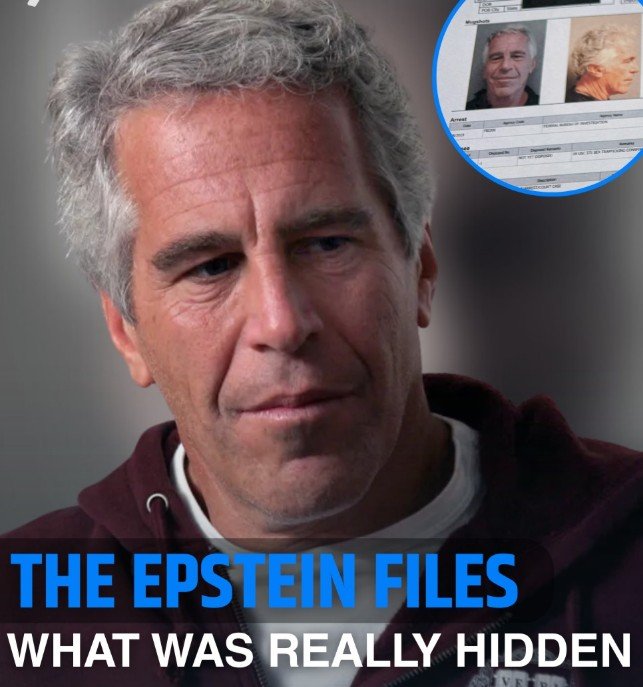
We now know from the Epstein documents that the world is run by a cabal of baby-eating paedophile satanists!!
Gosh, that sounds alarming! Is it true? Do the released documents provide evidence of this?
Below is summary of what we can reasonably claim to know, followed by a short discussion of three of the more lurid claims. This is quite a long discussion, but if you are interested you may find this helps to clarify some of the key issues.
Jeffrey Epstein’s illegal behaviour is unusually well‑documented in official records, but also surrounded by exaggeration and speculation online. Below is a summary of what is firmly established from court documents, government reports, and the recent document releases, as distinct from popular rumours.
Proven criminal conduct resulting in court convictions.
The only completed criminal conviction during Epstein’s lifetime was in Florida in 2008.
2008 Florida plea: Epstein pleaded guilty in state court to:
Felony solicitation of prostitution.
Procuring a person under 18 for prostitution.
Context of the case:
Palm Beach police and the FBI had identified dozens of minor girls alleging abuse, some as young as 14.
Local police originally recommended multiple felony counts of unlawful sexual activity with minors, but a federal non‑prosecution agreement sharply limited exposure.
Sentence and consequences:
18‑month sentence, of which he served about 13 months, mostly on lenient “work release”.
Required to register as a sex offender and pay restitution/settlements to numerous identified victims.
These facts are not in dispute; they come directly from plea documents, sentencing records and subsequent reviews of the “sweetheart deal”.
2019 federal indictment (never brought to trial)
In 2019, federal prosecutors in the Southern District of New York charged Epstein with sex trafficking, but he died before trial, so there is no criminal verdict on those counts.
Charges in the 2019 indictment:
One count of sex trafficking of minors.
One count of conspiracy to commit sex trafficking of minors.
Alleged conduct (as laid out in the indictment and DOJ summaries):
Time frame: primarily 2002–2005.
Locations: his homes in Manhattan and Palm Beach (plus other properties mentioned more generally).
Pattern: recruiting underage girls to give “massages” that turned into sexual abuse, paying them in cash, and encouraging them to recruit additional girls.
Victims: “dozens” of minors, some as young as 14.
Pre‑trial status:
He was denied bail after the court found he posed a danger to the community and risk of obstruction, citing intimidation and payments to potential witnesses.
He died in jail in August 2019, ruled a suicide by the medical examiner.
Legally, these remain allegations rather than adjudicated facts, but they are detailed in sworn indictments and supported by victim testimony and corroborating evidence described in official filings.
Ghislaine Maxwell and corroborated patterns.
Maxwell’s conviction establishes that a broader sexual exploitation scheme existed, even though Epstein himself was not tried on those specific counts.
Maxwell verdict:
Convicted in federal court in 2021 on multiple counts including sex trafficking of a minor, conspiracy to entice minors to travel to engage in illegal sex acts, and related charges.
Sentenced in 2022 to 20 years in prison.
Findings consistent with Epstein evidence:
The jury accepted evidence that Maxwell recruited and groomed underage girls for Epstein to abuse, and sometimes participated herself.
Victim accounts in her trial mirrored the patterns alleged in the 2019 Epstein indictment (massages, cash payments, repeat abuse, recruitment of other girls).
Maxwell’s case doesn’t expand Epstein’s proven conduct beyond “sexual exploitation of minors over a period of years,” but it corroborates that pattern and confirms there was at least one convicted co‑conspirator.
Recent document releases: what they actually add.
Two big sets of documents have fed recent headlines: (1) the unsealed civil case material (often called the “Epstein list”), and (2) the large “Epstein files” disclosure by the U.S. Department of Justice under transparency legislation.
Unsealed civil documents (Giuffre v. Maxwell) These are primarily from Virginia Giuffre’s defamation lawsuit against Maxwell.
Contents:
Depositions of Giuffre and other witnesses describing recruitment, abuse, and Epstein’s social circle.
Emails showing Epstein advising Maxwell on how to respond to accusations, including suggesting payments or “rewards” to people who might discredit Giuffre.
On third‑party names:
Roughly 150 people are named or referenced, from staff and victims to well‑known public figures.
The documents show who was in Epstein’s orbit (socially, professionally, or as a contact), but being named is not the same as being accused of, let alone proven to have committed, a crime.
Many names had already appeared in flight logs, visitor records, or prior reporting; there were few genuinely new substantive allegations.
The key point is that these documents enrich our understanding of the network around Epstein and of victim testimony, but they do not by themselves establish new criminal liability for particular prominent individuals.
The larger “Epstein files” DOJ release.
More recently, millions of pages of investigative files, emails, photos and other records have been released pursuant to transparency legislation.
Scale and nature:
Over 3 million pages of FBI and DOJ materials, including investigative memos, correspondence, and material related to possible co‑conspirators.
Internal memos discussed potential co‑conspirator prosecutions and cooperation by various witnesses.
What prosecutors ultimately decided:
The Deputy Attorney General stated that, despite the large volume of material and extensive investigative work, the files did not support additional prosecutions beyond those already brought.
He emphasised that there was “a lot of correspondence, … emails, … photographs” but that they did not “allow us necessarily to prosecute somebody.”
Implication:
The release confirms the breadth of the investigation and the existence of many associations, but it also underlines that prosecutors did not judge the evidence sufficient to charge further individuals, at least under current law and standards of proof.
The new releases deepen the picture but have not produced new criminal charges or clear, legally tested findings of guilt for additional people.
Social media claims vs. documented facts Many of the most lurid claims online go well beyond what is documented in legal records.
What is well‑supported That Epstein ran a long‑term pattern of sexual exploitation of underage girls, involving repeated abuse, payments, and recruitment of additional victims.
That this conduct occurred at multiple properties (Palm Beach, New York, and others) over a period of years.
That at least one close associate, Ghislaine Maxwell, was convicted for her role in recruiting and grooming minors for Epstein.
That Epstein cultivated relationships with many powerful people (politicians, business leaders, royalty, academics), who appear in flight logs, contact lists or social/event photos.
That investigators for years explored possible co‑conspirators and considered additional charges, as reflected in the co‑conspirator memos referenced in the new files.
What remains unproven or speculative.
Direct criminal involvement of every high‑profile person named in the documents or seen with Epstein.
Presence in flight logs, guest lists or correspondence is evidence of association, not proof of participation in crimes.
Specific allegations against certain famous individuals (e.g., detailed stories circulating on social media) often rest on:
Single witness statements disputed by the accused.
Hearsay, second‑hand claims, or uncorroborated anecdotes.
Misreading of heavily redacted documents or mixing separate claims together.
Vast “blackmail ring” theories in which Epstein is portrayed as centrally controlling large parts of global politics or finance.
There is evidence Epstein collected compromising material and that his circle included powerful figures, but the released files do not demonstrate a formal, centrally coordinated blackmail operation on the scale commonly asserted online.
Claims that specific deaths, elections or large‑scale events were directly engineered through Epstein‑related blackmail or networks; there is no documentary support for this in the released government material.
In other words, what is solidly documented is a serial pattern of sexual abuse of minors and a social network including many elites, not a fully mapped criminal conspiracy involving every person who ever knew him.
How to read new Epstein stories critically.
If you are trying to separate genuine facts from lurid claims, a few practical checks help.
Ask: “Is this claim tied to a specific document I can read?”
Court filings (indictments, plea agreements, judgments), sworn depositions, and official investigative reports carry much more weight than anonymous threads or screenshots.
Distinguish “named in connection with Epstein” from “accused of a crime.”
Many people are named because they flew on his plane, attended events, or knew him socially or through legitimate business dealings. Unless a filing or deposition specifically alleges criminal conduct by that person, it is misleading to infer guilt.
Check whether prosecutors acted on the information.
The recent DOJ statement that the huge trove of files did not support further prosecutions is a strong indicator of where the evidentiary threshold actually sat.
Note how a story handles uncertainty.
Responsible reporting distinguishes between established facts, credible allegations, and unverified speculation, whereas much social‑media content collapses those categories.
Three of the most lurid claims:
What about claims of an underground temple, eating human flesh, and bodies buried at a ranch in Mexico?
On those three specific claims, the evidence is either weak, indirect, or purely speculative; none of them is currently established as fact in the way Epstein’s sexual abuse and trafficking of minors are.
The “underground temple” on Epstein’s island There is a real, highly visible, ornate building on Little Saint James that is widely referred to as a “temple” in media coverage and online discussion.
Public records from the US Virgin Islands show the structure was approved as a music pavilion or similar facility, built between roughly 2009–2013, and later altered. Its odd design has fuelled conspiracy theories.
Claims that this building sits atop an extensive underground complex or ritual chamber are conjectural. Drone footage and reporting show the above‑ground structure and interior debris, but no evidence of tunnels, chambers, or an “underground temple” has been found.
To summarise: the “temple‑like” building exists and is strange, but there is no evidence it was ever used as a temple or for any form of religious ceremonies. There are no tunnels or large chambers beneath the building.
Cannibalism / “eating human flesh” The newly released DOJ “Epstein files” do contain a handful of references to “cannibal” and “cannibalism,” which fact‑checkers have traced mainly to a single anonymous interview and related notes, not to corroborated findings.
In that material, an anonymous man claims he witnessed extreme, ritual‑style abuse on a yacht around 2000, including babies being dismembered, intestines removed, and people consuming faeces. He also accuses Epstein and others of sexual abuse.
The witness was anonymous and did not supply supporting evidence. Investigators recorded the statement but did not categorise it as verified fact, and there is no sign it resulted in charges. Even in that account, the described consumption is of excrement, not flesh; there is no claim anywhere in the documents of anyone eating babies.
To summarise: the files document that someone made an allegation involving ritualised brutality and bodily mutilation, but there is no independent corroboration, no charges, and the “eating babies / human flesh” meme on social media is not supported by anything the documents actually say.
Bodies buried at a ranch in Mexico / Zorro Ranch Epstein did own a large property called Zorro Ranch near Stanley, New Mexico, which has been repeatedly mentioned in abuse allegations.
Recent coverage of the “Epstein files” focuses on an email, apparently from a person claiming to be a former staffer, alleging that two foreign girls were strangled during rough sex and buried in the hills near the ranch on Epstein’s orders and those of “Madam G.”
Key points about this claim:
It is presently an unverified and anonymous allegation transmitted in an email, not a finding from a completed investigation.
New Mexico’s state land commissioner and other officials have asked federal and state law‑enforcement to investigate the site. So far no evidence has been found to support the claim.
The “6-7” meme, often written as “six-seven” or “67,” originated from rapper Skrilla’s 2024 song “Doot Doot (6 7)”, where he repeats the phrase in rap style rhythm. It exploded on TikTok and YouTube Shorts through basketball edits, linking to players like LaMelo Ball who is 6’7″ tall, and a viral clip of a teenager at a game yelling “6-7!” with a hand gesture.
In Skrilla’s track, “6-7” might be a reference to 67th Street (Philadelphia or Chicago), police code 10-67 for death, or simply randomness. Skrilla says it doesn’t have a specific meaning in the song. The audio clip fuelled multiple edits, evolving into a standalone meme by early 2025.
The phrase has no fixed definition. It is intentionally absurd. It means nothing and is simply fun to say. It is used randomly for anything mid or approximate (like “6-7 o’clock”), or just to be silly among peers. Kids shout it as an in-joke or shibboleth to feel included, often with an up-and-down hand motion mimicking rap actions or a scale or emote. Historical phrases like “at sixes and sevens” (meaning chaos, from medieval dice) are coincidental, not connected.
It is very easy to recognise failings in others. The recent release of the Epstein files has brought this into sharp focus. Jeffrey Epstein appears to have been a serial user of women and girls, some as young as fourteen. Such actions are rightly reviled. It is easy to point such behaviour out and say how evil it is, in part because most of us, and most people, do not participate in that particular kind of evil.
Some Christian Facebook friends have posted and reposted with energetic enthusiasm about the need to, and their right to, call out evil. This has included accusations about business people, politicians, and film and music stars.
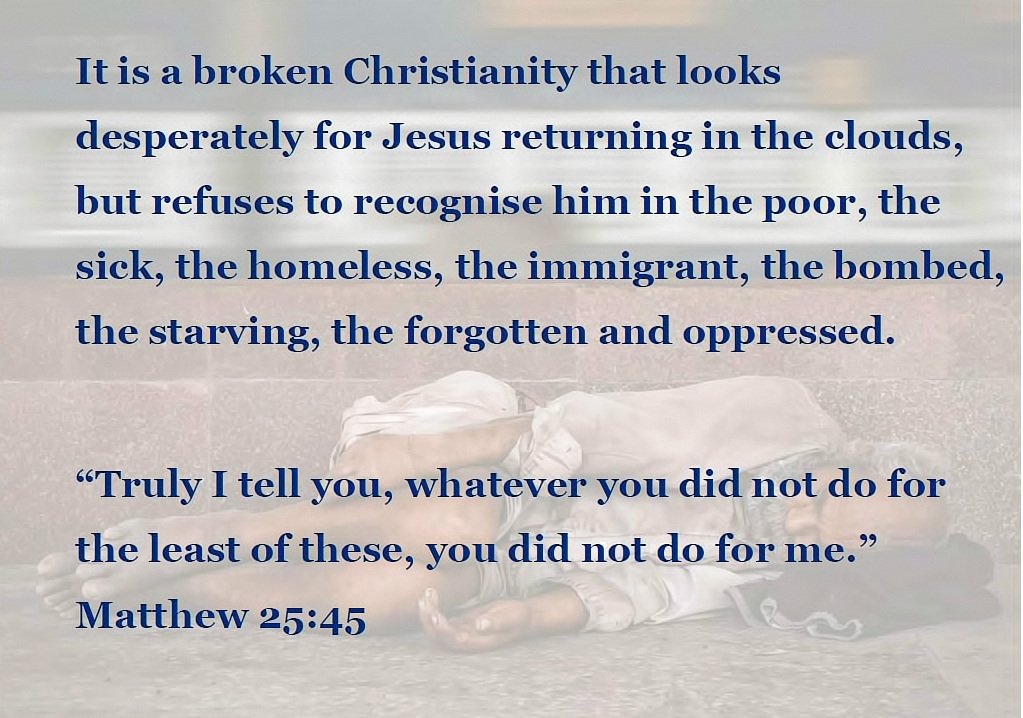
But the evil we are primarily directed to call out is the evil that resides in our own hearts. There are never any circumstances where it is right to pass on false witness or gossip, or stories which float across our timeline which we cannot verify, or to call people names, including politicians who have views that differ from ours.
In relation to this, and to Epstein’s offenses in particular, I have seen repeated use of Matthew 18:6: “If anyone causes one of these little ones to stumble, it would be better for him to have a large millstone hung around his neck and to be drowned in the depths of the sea.” This is usually accompanied by some reference to how vile child sexual offenders are, and how they deserve everything they get. Of course offences against children are indeed vile and deserve matching punishment.
But this is not what Matthew 18:6 is about. The words “little ones” here do not refer to children, though children can be included in that group. The underlying Aramaic word is “zeʿorē.” Although it is not etymologically related to our word zero, the similarity can remind us that Jesus is talking about those we do not see, people who are zeroed out. This can include unborn children, male victims of domestic violence, refugees, prisoners, people who are homeless or suffer from addiction or mental illness.
Most of us, by the grace of God, are not tempted to abuse children. But we all have blind spots, where our greed or political views, or sheer lack of interest, make certain groups of people invisible.
Rather than worrying and reposting about what other people have been doing or might have been doing, let’s take Jesus’ words to heart and start thinking more carefully about what we ourselves have NOT been doing; going out of our way to care for the little ones, the people society zeroes out.
Spotify is not your friend ☹ And it’s certainly not ours.
My band Hitstax spends a lot of time thinking about the stories we want to tell. More time, sometimes a lot of time, finding words to tell the story. There has to be rhythm in the words – scansion. There has to be a consistent rhyming scheme, but without ever compromising on meaning.
Then coming up with a melody that fits the words. Then realising that tune doesn’t work and coming up with another one. Then finding a second but related melody for the bridge if there is one. Then thinking about instrumentation that works with the melody, and even more important, brings the story to the front.
For example, ukelele and slide guitar to create a Hawaiian surf feel for Shadows in the Golden Sea – an allegory for life. Or clashing guitars and weird synths to make a heavy, strange, and sinister atmosphere for Inferno (based on Dante and not yet released). Or cello, piano and gentle choir to match the thoughtful, sombre mood of Silent Shore, based on Kenneth Slessor’s great Australian war poem Beach Burial.
This is the main reason we don’t have a “style” – because the story comes first, and every story is different. In doing this, I think we have created a couple of entirely new genres. There is nothing that sounds like our Western rock songs with Indian instrument and rhythm overlay like Build Again, and no, it’s not Bhangra. Nor is there anything that sounds like our heavy swamp rock, like Voodoo Call.
And then you stream these songs on Spotify and you can’t tell a flute from a goose fart, or a oboe from your elbow, because it sounds someone has dumped a wheelbarrow of mashed potatoes over the speakers. In the free version of Spotiface you can’t play the songs you want, you are drowned under ads, and you might as well forget about the music. It’s all mashed potato.
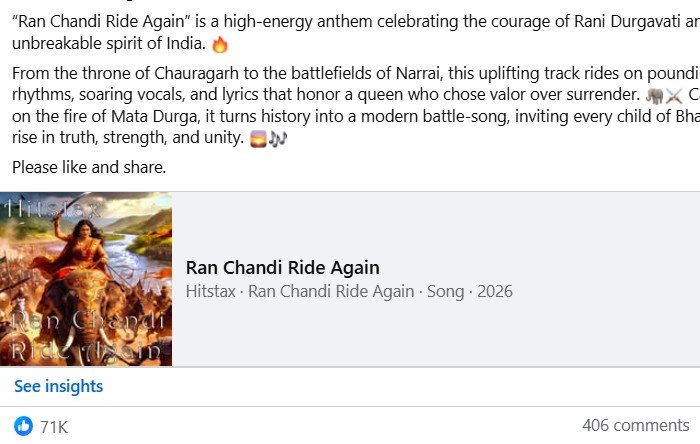
But the final straw is that Sloptify is simply not honest in reporting plays. We have run a couple of small Facebook promos. For Out Of My Way and Hey Honey Honey, likes were almost an exact match for plays. Some people played them and didn’t leave likes on FB. A few people left likes but didn’t play the song. But it evens out. Last week we ran a highly targeted promotion for Ran Chandi Ride Again, a patriotic song for India. Over 70,000 likes. 70,000! And over 400 positive comments. How many plays did Snotify record over that same period? 37. Not real, and not fair.
It’s not so much the money that bothers me. Spottibutt only pays 0.1 cent per play. 1,000 plays will earn you a dollar. $70 would be nice but whatever. It’s more that that number of plays in a few days would trigger algorithms that lift our other songs. Or that’s what they tell us.
Anyway, we have three tracks in the release timeline for Slagifly, but I think that will be it. No more. All of our releases will go to Soundcloud, and some of the other high definition services like Tidal. You can find all the songs I mentioned above on Soundcloud (except Inferno).
Recently someone complained to me online that he could never consider Christianity because computer modelling had shown that without the Church’s interference, science would be 400 years further advanced than it is.
There is no evidence of any computer modelling claiming that science would be 400 years more advanced without Church suppression. This assertion stems from debunked claims propagated in 19th-century “conflict thesis” books like John Draper’s History of the Conflict between Religion and Science (1874), often visualized in misleading graphs showing stalled progress during the Middle Ages. Such graphs claiming massive delays of 400–1,000 years circulate online but have been labelled “complete bulls*#t” by historians.
Even if such computer modelling had been conducted, it could tell us nothing new. Computer models cannot produce new information. They can only give back what is input, sometimes presenting information in new ways. They reflect the information and assumptions put into them.
The only objective way a delay caused by Christianity could be measured would be to compare the development of science in the West with the development of science in other societies. But this cannot be done, for the simple reason that the Christian West is the only place where the scientific method, and science itself; the careful, systematic, objective study of material reality for its own sake, ever developed.
But how can this be, if Christianity is the great oppressor of science? There are two answers to this question. First, Judeo-Christian metaphysics are a necessary foundation for science. And secondly, far from being an oppressor of objective study and truth-seeking, the Church has always been the great supporter and defender of science. I will explain each of these claims in turn.
I am not the first to notice that science arose only where Christianity was the common faith. For example:
“The fundamental paradigm of science; its invariable stillbirths in all ancient cultures and its only viable birth in a Europe which Christian faith in the Creator had helped to form.” Stanley L. Jaki, Theologian and physicist, The Road of Science and the Ways to God.
“Theological assumptions unique to Christianity explain why science was born only in Christian Europe. Contrary to the received wisdom, religion and science not only were compatible; they were inseparable.” Rodney Stark, Historian, For the Glory of God.
But why? What are these theological and metaphysical assumptions that are unique to the West, and underpin the development of science?
Science and the scientific method could only take hold in a world view that:
The material world is objectively real, not simply an illusion; why would you bother to investigate something that wasn’t real?
The material world is good – something worth investigating, not an evil to be escaped from
That the material world is ordered according to rules which can be investigated and understood, and not by the whim of inhabiting spirits or an god who rules by fiat
And finally, that faith has nothing to fear from the truth.
This is the standard Western understanding of reality, so it seems difficult to many Westerners to imagine that people could think otherwise. But in reality this combination of beliefs is uniquely Judeo-Christian. This is why science, the systematic and objective study of reality for its own sake, has taken root and flourished in the West as nowhere else, which has in turn given the West enormous advances and advantages in science and technology.
The usual response to this claim by detractors is: “But what about Galileo?” The fact that most people can think of only one possible counter-example in 2,000 years of Church history is itself telling. In reality, Galileo was never tortured, never imprisoned, and was always free to teach the Copernican theory as a theory, as had been done in other Catholic universities throughout Europe since heliocentric theory was first proposed by Nicholas Copernicus, a Catholic priest. When talking about this period in history, “Catholic universities” is a tautology. By the year 1500 there about 100 universities in Europe; every one of them was Catholic.
The issue with Galileo was that the Church insisted students be taught every reasonable alternative, with the evidence for and against, and allowed to make up their own minds. Galileo refused to teach anything except his own pet theories. In many of these, he was completely wrong. For example, as Einstein noted in 1953, Galileo’s theories about tidal action were nonsense. Galileo believed the rings of Saturn were not rings but a large moon on either side. He was savage in his attacks on Jesuit astronomer Orazio Grazzi, who correctly described comets as small heavenly bodies, while Galileo insisted they were reflections shining on vapours rising from the earth. In each of these instances, Galileo refused to teach or consider any other possibility.
As philosopher of science and Berkeley professor Paul Feyerabend noted, it was the Church, not Galileo, which was on the side of reason and science: “The Church at the time of Galileo was much more faithful to reason than Galileo himself, and… her verdict against Galileo was rational and just.” Paul Feyerabend (from Against Method, 1975).
Add to this that Catholic priests were founders of several branches of science. Marin Mersenne (1588-1648), a priest of the Minimite order, founded the science of acoustics (the physics of sound), and advanced music theory and knowledge of prime numbers. The science of geology started with the work of Bl. Nicolas Steno (1638-1686), who discovered the origin of sedimentary rock and fossils and established the laws of stratigraphy. One of the founders of astrophysics was the Jesuit priest Angelo Secchi (1818-1878), who pioneered the use of spectroscopy to study stars and developed the first systematic classification of them. The Augustinian friar Gregor Mendel (1822-1884) is regarded as “the father of genetics.” The Big Bang theory was first proposed by Fr. Georges Lemaître (1894-1966), a Belgian priest and theoretical physicist.
These are only a tiny proportion of the total number of Catholic scientists who have made major contributions. There is a list on Wikipedia, which, impressive as it is, includes only lay people. https://en.wikipedia.org/wiki/List_of_lay_Catholic_scientists A list of clergy, including those I mentioned above, would be just as long.
In the late 1700s, one quarter of all the astronomical observatories in the world were run by the Jesuit order, as is the Vatican Observatory to this day. The Jesuits were also pioneers in the field of seismology, their far-flung missionaries setting up seismological stations around the globe.
It is worth noting that the medieval Church held natural science (then called “natural philosophy”) in such high esteem that it was a prerequisite for studying theology in medieval universities.
The Church’s insistence that students be presented with the evidence for and against all reasonable theories on any issue, required to do their own research, encouraged to make up their minds on the basis of the evidence, and then calmly and rationally argue their point of view with their professors and other students, is still the key to effective learning, in opposition to agenda driven lecturing.
Now, as for the last 2,000 years, the Church remains the patron and defender of science.
I have been thinking lately about kindness. It is more than just being nice to people you like, or who share your views. Kindness means caring for people whether or not they care for you, wanting the best for them no matter how difficult they may be, and treating others with respect, even when they differ from you.
Kindness counts
Kindness
Not by the word alone is mercy shown,
For faith unworked is faith that stands in vain;
The heart reveals through deeds what seeds are sown,
And love bears fruit where self has died in pain.
It is no cross to bless the kind and true,
Nor hard to heal where love awaits our care;
But Christ knelt down for those who never knew
The gift He gave, nor thanked the mercy there.
So must we learn to love beyond our will,
To heal the wounds that prideful self still fears;
It seems we cannot get past Australia Day now without seeing multiple claims that national celebrations on January 26th commemorate the Nationality and Citizenship Act 1948 which came into effect on January 26, 1949.
The first time this claim was made seems to have been on social media in 2020. It does not appear anywhere in books, government documents or any other media before then, and seems simply to have been invented.
In fact, the Act was deliberately proclaimed on Australia Day. By 1949, January 26th had been celebrated in NSW for more than 100 years.
Australia Day on January 26 originated as a commemoration of the First Fleet’s arrival at Sydney Cove on January 26, 1788, led by Captain Arthur Phillip.
The first official public holiday marking this date was declared in New South Wales by Governor Lachlan Macquarie in 1818, for the 30th anniversary, including a gun salute and extra rations for government workers.
Celebrations remained mostly local to Sydney (as “Foundation Day” or “Anniversary Day”) until the 1930s, when all states agreed to observe January 26 as “Australia Day” in 1935, with public holidays unified nationwide by 1940.
The Nationality and Citizenship Act is worth remembering, but it is not the reason we celebrate the 26th of January as Australia Day.
Freedom of speech simply means that except in a very few, very limited cases (immediate calls for violence, for example, or state secrets during war time), the government will not interfere in what you think or say.
Recent legislation in the UK and now in Australia has put some further limits on that right that many, including me, find troubling.
However, freedom of speech simply means that you can say what you like without government interference. You are not free from the consequences of saying what you like. Those consequences may include people asking how you know what you claim to know, or people deciding they do not wish to be friends with you, or employ you, or suing you for defamation.
In addition, freedom of speech has never meant that anyone is required to listen to you, or to provide a platform for your views. It is not a denial of freedom of speech for a social media company to decline to host views they believe are offensive or could cause harm to others, or indeed for any reason whatever.
Your freedom to think and say what you like does not mean others can be forced to publish those views.